What Happens When a Punjabi Wedding Ceremony Runs Late? Wedding Car Waiting Time Explained
A Punjabi wedding timetable can look perfectly organised before the wedding day. The groom may be scheduled to leave home at 7:30 in the morning, the Anand Karaj may be planned for 10:00 AM, lunch may be expected to finish by early afternoon, and the reception or doli may have a fixed time written in the family schedule. Once the celebrations actually begin, however, those timings can move very quickly. A makeup appointment takes longer than expected, the baraat leaves late, Milni continues for another twenty minutes, photographs take more time, guests are slow moving between venues, or the final doli becomes emotional and happens well after midnight.
That is why waiting time should be treated as a normal part of Punjabi wedding transport planning rather than as an unusual problem. When families arrange a chauffeur-driven wedding car through Punjab Wedding Cars, it is useful to explain the complete journey and expected schedule from the beginning. A luxury car required only for a groom's arrival is a very different booking from the same vehicle reporting in the morning, waiting outside a Gurudwara, moving to a marriage palace, remaining there through photographs and then being required again for a late-night doli.
The important question is therefore not simply whether a wedding car can wait. Families should understand how long they are realistically likely to need the vehicle, when the chauffeur should report, what happens when the function goes beyond the expected time and whether the same vehicle genuinely needs to remain available throughout the day.
Why Punjabi Weddings Often Run Later Than Planned
A wedding involves dozens or sometimes hundreds of people, and one delay can easily affect the rest of the day. If the groom leaves home thirty minutes late, the baraat may reach the Gurudwara late. If the ceremony begins later than planned, lunch, photography and the next venue movement may all move accordingly. By evening, a small delay in the morning can become a much larger difference between the planned schedule and the actual doli time.
This is especially common at weddings involving several locations. The day might begin at the groom's home, move to a Gurudwara, continue to a marriage palace or resort and finally end at the bride's destination. Each movement introduces another opportunity for timing changes. Families arranging wedding cars in Jalandhar, Ludhiana, Amritsar, Patiala or Chandigarh should therefore plan transport around a realistic window rather than expecting every stage to happen at the exact minute written on the invitation.
A useful starting point is our guide on what time your wedding car should arrive from groom pickup through doli. Reporting time and actual departure time are not the same thing, and allowing a sensible buffer is one of the easiest ways to prevent transport stress.
A Short Delay Is Different From Several Hours of Waiting
A twenty-minute delay while the groom finishes getting ready is normally very different from a vehicle waiting an additional four or five hours at a reception. This distinction is important because wedding car hire is not based only on the distance travelled. While a luxury car is waiting at the venue, it remains committed to that wedding. The chauffeur is still on duty, the car cannot necessarily be allocated elsewhere, and the overall assignment becomes longer.
This is why families should be transparent about the likely duration when requesting a quotation. If a car is actually required from 8:00 AM until after midnight, it should not be described as a simple morning pickup. In the same way, a bridal car needed only from the marriage palace to the bride's final destination should not be booked as though it will be in use all day.
Our guide to why wedding car rental prices change in Punjab explains how vehicle choice, route, distance, waiting time, wedding season, decoration and booking duration can influence the final quotation. The more accurate the itinerary is at the time of booking, the easier it is to avoid misunderstandings later.
Waiting at the Groom's Home
One of the first delays of the day often happens before the groom has even left. The chauffeur may arrive on time, but the groom is still getting ready, family photographs have started, the sehra ceremony is continuing or relatives have not yet reached the house. A departure planned for 8:00 AM becomes 8:30 or 8:45 AM.
Having the wedding car report slightly before the planned departure is sensible because it allows time for vehicle positioning, decoration checks and photographs. The mistake is booking the car many hours early without explaining the actual plan. A professional chauffeur can work with a realistic wedding schedule much more effectively when the family shares the expected sequence beforehand.
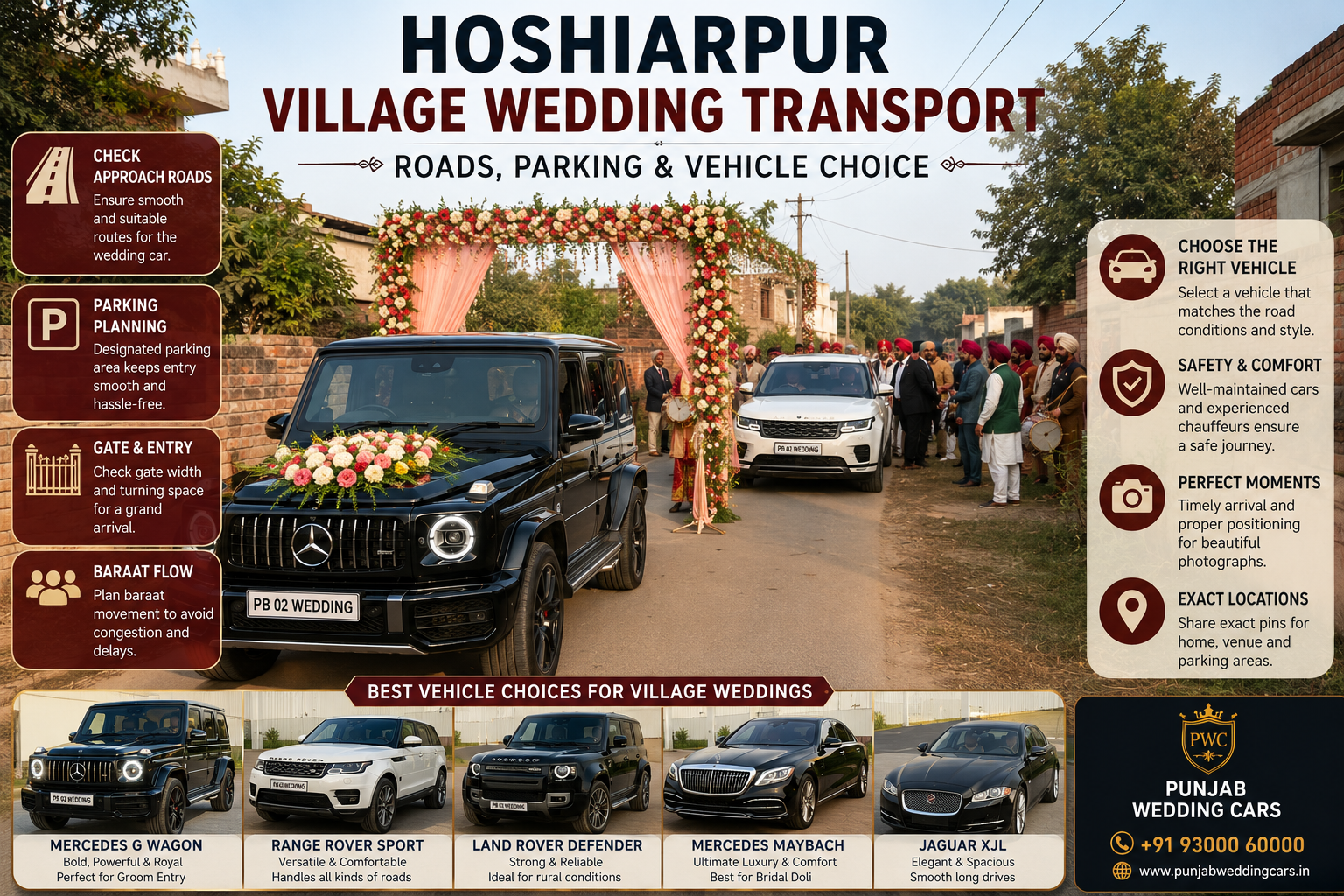
For a bold groom arrival, vehicles such as the Mercedes G Wagon G63 AMG are often chosen because of their strong road presence. Whatever vehicle is selected, however, it should be scheduled according to the actual groom movement rather than simply being parked outside for unnecessary hours.
Waiting During the Anand Karaj
Anand Karaj timings deserve flexibility because the ceremony should never be hurried to satisfy a vehicle schedule. The wedding car may need to remain outside while the ceremony finishes, relatives greet one another and the couple completes family photography.
If the same vehicle will be needed after the Gurudwara, this should be included in the transport plan. It is very different from hiring a car only for the groom's entrance and releasing it once the baraat reaches the venue.
Multi-location weddings are easier when the family treats transport as one connected journey. A car required for home pickup, Gurudwara arrival, palace transfer and later photography has a clear role throughout the day. Problems usually occur when a vehicle is booked for one small part of the event but relatives later expect it to remain available indefinitely.
Photography Can Add More Waiting Than Families Expect
Photography is one of the most underestimated parts of wedding timing. After an Anand Karaj, the couple may need photographs with parents, grandparents, siblings, cousins and friends. There may be photographs inside the venue, outside the Gurudwara and beside the wedding car.
At a reception, the process can take even longer. Guests continuously come to the stage, dinner may start late and the photographer may want a separate couple session after the crowd begins to reduce. A doli planned for 10:30 PM can therefore move to midnight without anyone deliberately creating a delay.
The solution is not to rush the photography. It is to include realistic photography time in the wedding car booking. If the luxury car is part of the photo session, tell the transport provider in advance so the chauffeur knows the vehicle must remain clean, positioned correctly and available for those photographs.
What Happens When the Doli Runs Late?
Doli is probably the part of a Punjabi wedding that needs the largest timing buffer. An itinerary may show an expected departure time, but emotional family moments do not always follow a timetable. Dinner may finish later than planned, the bride may need additional time to change or prepare, photographs may continue and family traditions can extend the departure further.
The bridal car should therefore normally be ready before the expected doli rather than being called only after the bride is already standing at the exit. If a family expects the doli around 11:00 PM, the transport plan should allow the vehicle to be positioned earlier.
Our Bridal Doli Transport Checklist looks at this part of the wedding in more detail, including the car, bridal luggage, accompanying family and late-night journey. The most important principle is that the final destination should already be known. The chauffeur should have the correct location pin and contact details before the doli begins.
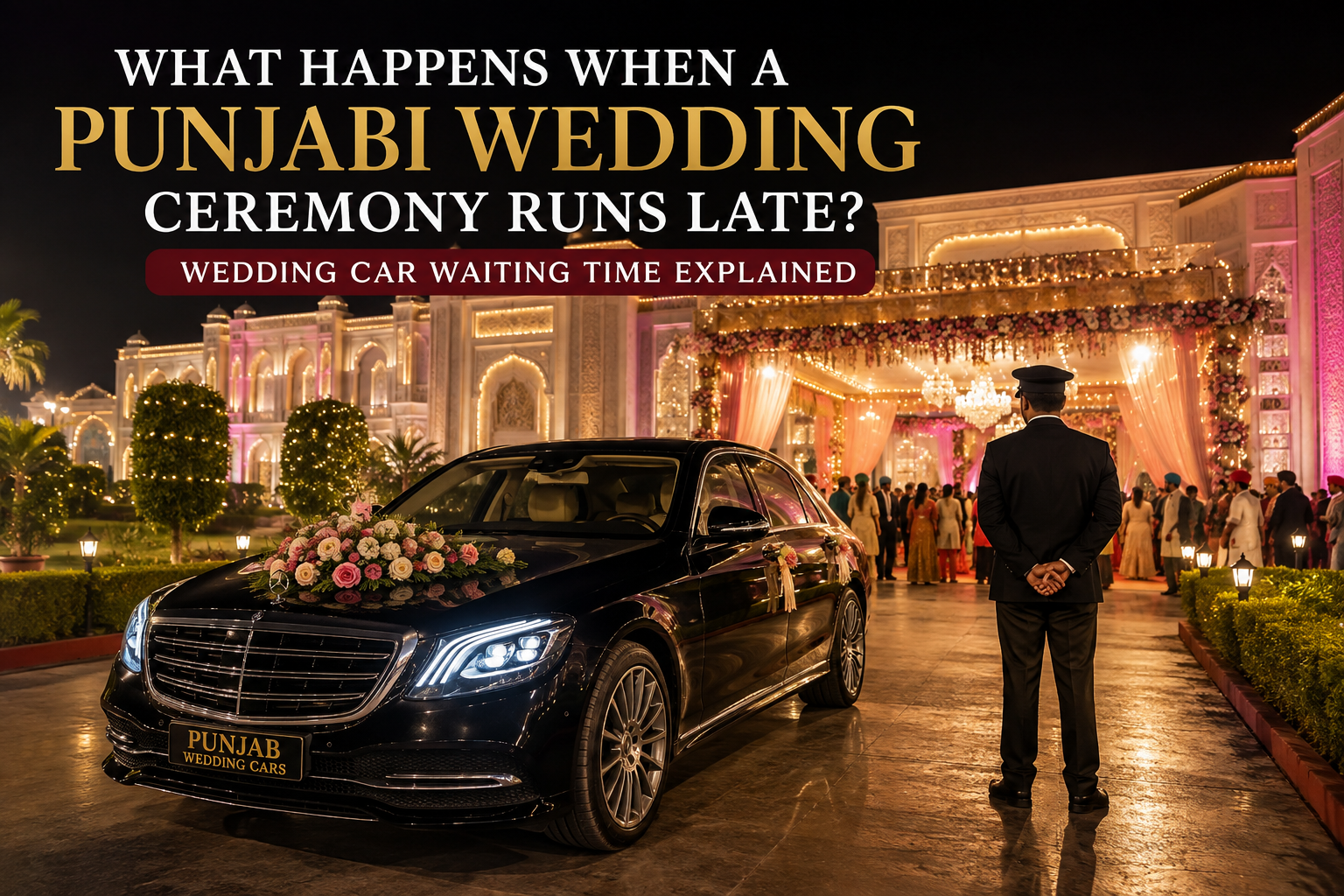
For bridal travel, a rear-seat-focused luxury car such as the Mercedes Maybach can provide a comfortable chauffeur-driven environment after a long wedding day. Families preferring an SUV may consider the Range Rover Sport, while a Rolls Royce Ghost gives the departure a more traditional ultra-luxury feel.
Late-Night Wedding Travel Requires Different Planning
When a function continues beyond midnight, the nature of the journey changes. The wedding car is no longer mainly part of the entrance or photography. It is now transporting a tired bride, groom or family members after a very long day.
The chauffeur should never be pressured to recover lost ceremony time by driving faster. If the wedding finishes two hours late, the journey should still be completed safely and comfortably. This becomes even more important during Punjab's winter wedding season, when fog can reduce visibility on intercity roads and village approaches.
If the doli is expected to involve a substantial late-night journey, tell the wedding car provider while booking. A local fifteen-minute drop and a two-hour intercity journey beginning at 1:00 AM are completely different transport requirements.
Should the Same Wedding Car Stay With You All Day?
Many families assume that the safest solution is to keep one luxury car from morning until night. Sometimes that is appropriate, but it is not always necessary.
A groom may want the Mercedes G Wagon for his morning arrival, while the bride may prefer the Jaguar XJL, Audi A6 or Mercedes Maybach for the evening doli. In that situation, two specifically timed assignments may make more sense than leaving one vehicle waiting for ten or twelve hours.
Families can compare the full Punjab Wedding Cars luxury fleet and choose vehicles according to their actual roles. The goal is not to book more cars than necessary. It is to use each vehicle intelligently.
Keep the Wedding Car Focused on Its Assigned Job
A luxury car waiting outside the marriage palace can sometimes look available for errands. Someone may ask the chauffeur to collect an uncle from a hotel, take a relative home or pick up a forgotten bag.
This can cause serious timing problems.
If the bridal car is required for doli later, sending it away shortly beforehand introduces unnecessary risk. Traffic may change, the passenger may not be ready, or the vehicle may become stuck at another entrance while the bride is waiting.
Guest pickups, hotel runs and small errands should normally be handled by family vehicles or specifically arranged guest transport. Our Wedding Guest Transport Plan explains why separating VIP wedding cars from general guest movement helps the entire event run more smoothly.
One Family Member Should Coordinate With the Chauffeur
Wedding transport becomes difficult when many relatives give the chauffeur different instructions. One person says to stay at the main gate, someone else asks the car to move to a side entrance, and another relative sends it to pick someone up.
Appointing one family transport coordinator prevents this.
That person should know the expected schedule, chauffeur contact, next destination, approximate doli timing and any major changes. If the ceremony begins running significantly late, the coordinator can update the chauffeur or Punjab Wedding Cars booking team rather than leaving everyone uncertain.
Clear communication becomes particularly important when several luxury cars are involved in the same wedding.
Build Waiting Time Into the Plan Before the Wedding
The easiest time to deal with wedding car waiting is before the wedding happens.
When requesting a quote, explain the actual route. If the car must travel from the groom's home to the Gurudwara, wait through the ceremony, continue to a palace and later be used for doli, say exactly that.
Likewise, if the wedding is expected to continue past midnight, mention it rather than providing an artificially early finish time.
A useful itinerary might say that the chauffeur reports at 7:30 AM, the groom is expected to leave around 8:15 AM, the Gurudwara ceremony should finish around noon, photographs may continue afterwards, the vehicle may be needed at the reception in the evening and the expected doli window is between 10:30 PM and midnight.
That gives the transport provider something realistic to plan around.
Planning for Delays Makes the Wedding Feel More Organised
A Punjabi wedding running late is not automatically a transport problem. It becomes a problem when the car, chauffeur and family have all been given different expectations.
The best approach is to accept that some flexibility may be needed and plan accordingly. Allow sensible buffer time, provide the real journey details, confirm whether the vehicle is needed throughout the event and keep the chauffeur informed if the schedule changes significantly.
Punjab Wedding Cars provides chauffeur-driven wedding transportation across Punjab, Chandigarh and intercity wedding routes, including luxury bridal cars, groom arrival vehicles and NRI wedding transportation. The aim of a properly planned booking is not to force the wedding to follow an unrealistic minute-by-minute timetable. It is to ensure the transport remains organised even when the ceremony does not.
When the booking accurately reflects the real wedding schedule, a late Anand Karaj, extended photography session or emotional midnight doli can be handled calmly. The luxury car is where it needs to be, the chauffeur understands the assignment, the family knows what has been arranged and the couple can leave the venue without the final part of the wedding turning into a transport emergency.
That is ultimately what wedding car waiting time is about: not simply paying for a vehicle to sit outside a venue, but keeping the right chauffeur-driven car available at the right stage of a wedding whose timing may naturally change as the day unfolds.