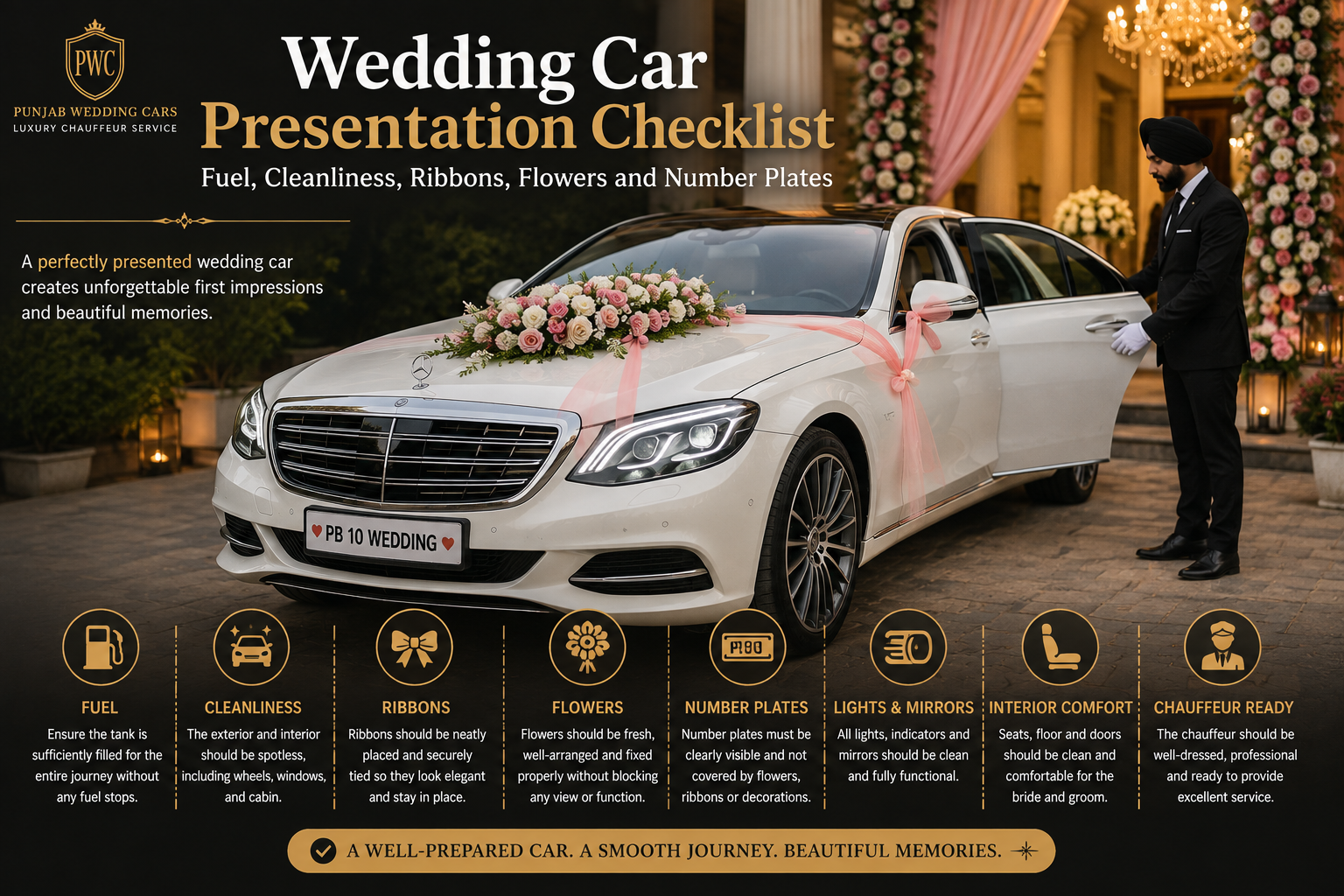
Wedding Car Presentation Checklist: Fuel, Cleanliness, Ribbons, Flowers and Number Plates
A luxury wedding car should look completely ready when it reaches the bride or groom. The family should not see somebody wiping the bonnet while the groom is waiting outside in his sherwani, and the bride should not reach the vehicle for doli while flowers are still being secured around the door. The photographer should be able to begin shooting as soon as the car is positioned, while the chauffeur should already know that the vehicle has enough fuel, the cabin is prepared and the decoration will remain secure throughout the real wedding journey.
Wedding-car presentation is therefore much more than adding ribbons and flowers. It begins with the condition of the vehicle and continues through fuel preparation, exterior cleaning, interior presentation, decoration placement, visibility, number plates, passenger comfort and final chauffeur checks. The aim is for the finished vehicle to look elegant in photographs without compromising the practical systems required when the car leaves the family home and begins travelling on public roads.
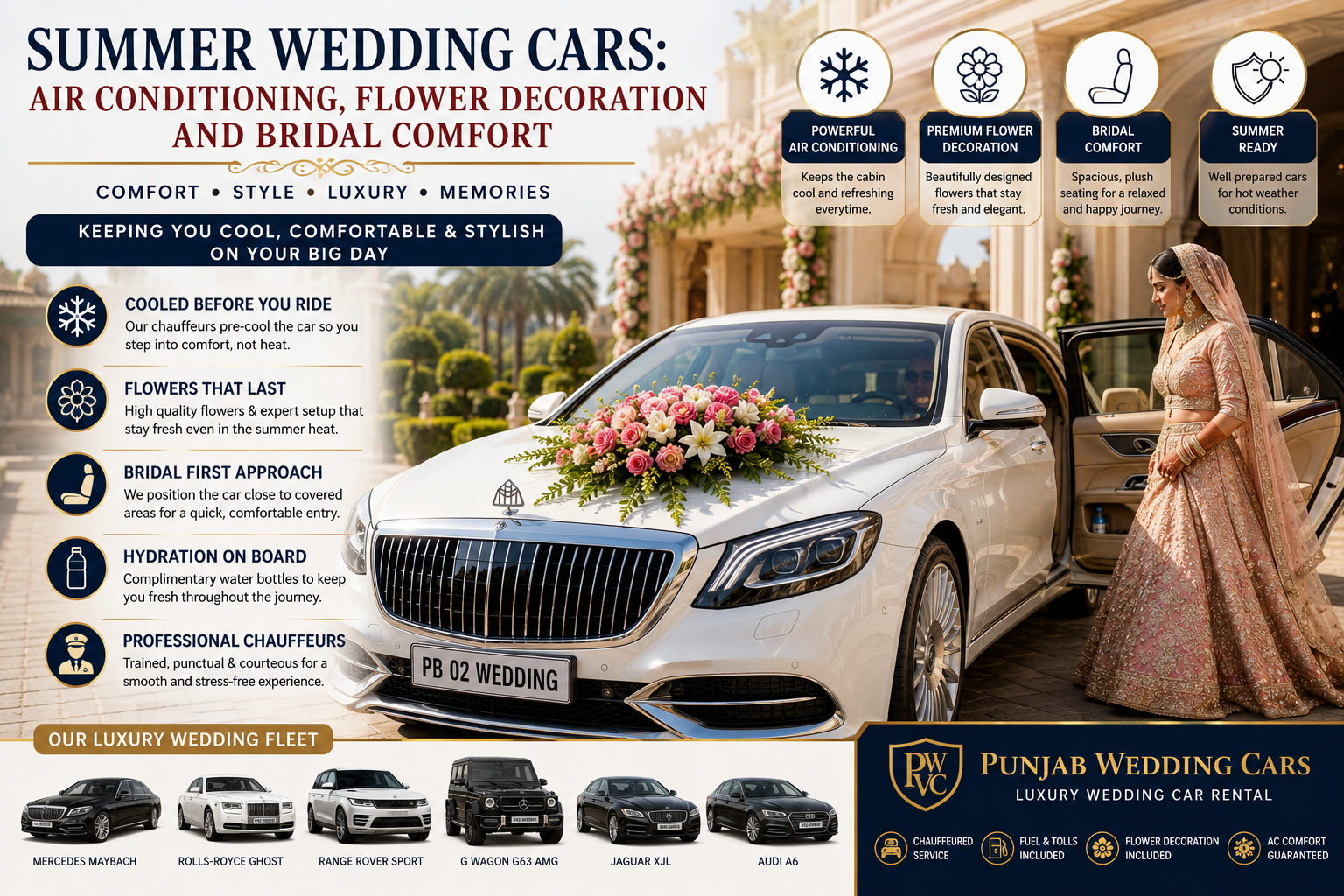
This matters even more when a family has specifically booked a premium model such as the Mercedes-Maybach, Mercedes G Wagon G63 AMG, Rolls-Royce Ghost, Range Rover Sport, Jaguar XJL or Audi A6. Families choose these vehicles because of their design and road presence, so wedding decoration should enhance that identity rather than cover it completely.
Presentation Begins Before the Car Reaches the Family
The best wedding-car preparation happens away from the bride and groom. By the time the vehicle reports at the pickup point, the main preparation should already be finished. The exterior should be clean, the decoration should be installed properly, the cabin should be ready for the passenger and the chauffeur should understand the confirmed route and reporting schedule.
This separation between preparation and passenger time is important because wedding mornings already contain enough activity. The groom may be finishing Sehra Bandi while photographers and relatives gather around the house. The bride may be completing makeup and dressing while family members prepare for departure. A wedding car should arrive as one completed part of the day rather than adding another unfinished task that the family needs to supervise.
Reporting before the actual departure also creates a useful buffer. If a ribbon has moved during the journey to the pickup point, the chauffeur can correct it. If the photographer wants the vehicle positioned differently, there is time to move it. If the rear cabin needs a final check, that can happen before the principal passenger approaches the car. Punjab Wedding Cars' guide on wedding-car arrival timing follows the same principle by separating chauffeur reporting time from the family's actual departure time.
Fuel Is Part of Presentation Even Though Nobody Sees It
Fuel rarely appears in wedding photographs, but it is one of the clearest signs that the vehicle has been professionally prepared. A groom should not enter a luxury car and then be taken to a fuel station on the way to Gurudwara Sahib simply because the tank was not checked before the assignment.
The same consideration becomes even more important for bridal doli and intercity wedding travel. A car may report in Jalandhar, travel to a Gurudwara, wait through the ceremony, continue to a farmhouse or reception and later complete another journey before its duty finishes. A bridal car may remain at the venue for hours before starting a long late-night journey to another district. Fuel preparation should therefore reflect the complete assignment rather than only the distance between the first pickup and first destination.
A properly prepared chauffeur-driven wedding car should begin the booking ready to complete the planned duty without inserting unnecessary fuel stops into the family's wedding schedule. If the route or duty has changed substantially, that should be addressed before the passenger enters rather than after the wedding journey is already underway.
The Real Route Determines How the Car Should Be Prepared
A wedding route is rarely as simple as the two city names used when the family first makes an enquiry. A vehicle described as travelling from Jalandhar to Ludhiana may actually begin at a village outside Jalandhar, stop at Gurudwara Sahib, continue to a farmhouse outside Ludhiana and later move to another final destination.
That matters because fuel, decoration durability and cleaning requirements all depend on the real route. A short urban journey places very different demands on floral decoration from an intercity trip involving highway speeds. A car travelling towards a rural farmhouse may encounter dust near the final venue approach, while a late-night doli could require the same decorated vehicle to remain operational many hours after it was first prepared.
The Punjab Wedding Cars guide on hidden route costs, detours, parking and extra stops explains why the actual pickup, waiting, stops and final destination matter more than simply describing a booking as one city to another. The same principle should guide presentation preparation because the car has to remain practical and presentable for the full journey.
Exterior Cleaning Should Come Before Flowers and Ribbons
Wedding decoration should be installed on a properly prepared vehicle rather than used to hide a car that still needs cleaning. Dust, fingerprints, dried water marks and road film become particularly noticeable when a professional photographer begins taking close-up images of a luxury vehicle.
Dark cars can show fine dust and hand marks very quickly, while white vehicles can reveal road dirt around the lower bodywork and wheel arches. Side glass and windscreens also deserve attention because reflections in wedding photographs can make even small marks visible.
The sensible sequence is to prepare and clean the car first, then install the chosen wedding decoration. Once flowers and ribbons are secured, heavy exterior cleaning becomes more difficult and may disturb the arrangement. Treating decoration as the final visual layer produces a much more polished result.
Wheels Are Part of the Photograph Too
Families often concentrate on the bonnet because that is where floral decoration usually goes, but professional photographs commonly show the entire front three-quarter view of the wedding car. In those images, the wheels and lower body become a significant part of the overall presentation.
A beautifully cleaned Maybach with visibly dirty wheels still looks partly unfinished. The same is true for a G Wagon or Range Rover being photographed with the groom. Low-angle photography can make the wheels even more noticeable because the photographer is intentionally using the car's stance and proportions as part of the composition.
Preparing the vehicle therefore means looking at the whole car rather than only the surfaces directly beside the flowers.
The Windscreen Must Remain Clear
A windscreen should be treated as a functional part of the car rather than as another surface available for wedding decoration. The chauffeur needs a clear field of vision during the journey, while a clean windscreen also improves photographs taken from the front of the vehicle.
Large ribbon arrangements, hanging decorative material or flowers should not extend into the driver's usable viewing area. This becomes even more important during winter fog, early-morning Anand Karaj travel, rain and late-night doli journeys when visibility may already be more demanding than during normal daylight driving.
A good decoration design respects the car's working areas. The windscreen can be spotless and visually attractive without needing anything attached to it.
Mirrors Should Look Clean and Remain Fully Functional
Side mirrors sometimes attract floral or ribbon decoration because they sit prominently on the sides of the vehicle. Small, carefully positioned decoration may work well, but the mirror still needs to perform its normal job.
The chauffeur may need to reverse into a farmhouse entrance, manoeuvre around a crowded marriage palace or navigate a narrow village approach. A mirror wrapped so heavily that visibility or adjustment is affected creates an unnecessary problem for the sake of a small decorative detail.
The best decoration remains visually balanced without making the chauffeur's work more difficult. If a floral arrangement interferes with a mirror, the decoration should be changed rather than asking the driver to adapt around it.
Headlights Need to Remain Visible
The front of the car is usually where floral arrangements become most elaborate, which is why headlights can easily become partly covered. This may not appear important during a daytime photoshoot, but the same wedding car may still be working after sunset.
A groom car used for a morning or afternoon function can later travel in evening conditions, while a bridal vehicle decorated earlier in the day may not begin doli until much later at night. Decoration therefore needs to suit the whole assignment rather than only the first thirty minutes in which the car is photographed.
Keeping headlights unobstructed creates a cleaner, more professional appearance and preserves the car's normal road function.
Number Plates Should Stay Visible
A wedding car is still a registered road vehicle while it is being used on public roads. Flowers, ribbons and decorative boards should therefore be arranged around the number plate instead of hiding it.
This is not merely an aesthetic preference. Indian motor-vehicle rules require registration marks to be displayed in the prescribed manner, so covering the plate with a large flower arrangement is not a sensible approach to wedding decoration.
A well-designed floral layout can easily leave the plate visible while still making the front or rear of the vehicle look ceremonial. In many cases, the result actually looks more professional because the decoration appears intentionally fitted to the car instead of being placed over every available surface.
Decorative Bride and Groom Signs Should Not Replace the Registration Plate
Families sometimes like signs displaying “Bride,” “Groom,” initials, wedding hashtags or the couple's names. These can work beautifully for stationary photography when they are positioned thoughtfully, but they should not automatically replace or cover the actual number plate during the road journey.
There is a useful difference between a photographic prop and permanent road decoration. A decorative sign can be used for a controlled stationary photograph and then removed or repositioned before travel if necessary. This allows the family to achieve the desired wedding image without creating a vehicle that looks improperly prepared once it begins moving.
Ribbons Need to Be Prepared for Road Speed
A ribbon that hangs attractively from a stationary car behaves differently once the vehicle is travelling at normal road speed. Loose material can flap against the paint, move towards mirrors or glass, shift out of position or detach completely during a longer journey.
This matters particularly for intercity weddings because the car may travel for substantial periods between the groom's home, Gurudwara Sahib, farmhouse venue and final destination. Decorative material should therefore be secured with the actual journey in mind.
Long ribbon tails may look dramatic while the car is parked but become less practical once the vehicle leaves. A slightly simpler arrangement that stays in place throughout the route often looks better by the time the car reaches the next photography location.
Decoration Should Follow the Shape of the Vehicle
Different luxury vehicles have different visual identities, so the same decoration pattern should not automatically be applied to every model.
A Mercedes-Maybach has long, elegant saloon proportions and can look extremely refined with restrained floral work. The G Wagon is upright, bold and immediately recognisable, which means heavy decoration is rarely necessary to create visual impact. A Range Rover Sport has another silhouette altogether, while a Rolls-Royce Ghost already has a highly distinctive front design.
The Punjab Wedding Cars fleet contains saloons, SUVs and limousines with very different shapes. Wedding decoration should complement those forms rather than hide them beneath one standard arrangement.
When families have paid to hire a particular luxury model, the finished photographs should still clearly show which car they chose.
Flowers Should Frame the Luxury Car Rather Than Cover It
A common mistake is assuming that more flowers automatically produce a more luxurious wedding car. In reality, excessive decoration can hide the design details that made the family choose the vehicle in the first place.
A Rolls-Royce does not need its entire grille covered to look special. A Maybach does not need flowers across every panel to communicate luxury. A G Wagon already has enormous visual presence when it arrives at a Punjabi wedding venue.
Thoughtful decoration allows the vehicle itself to remain part of the visual story. A carefully positioned arrangement on the bonnet, subtle door details and restrained ribbons can create a stronger premium appearance than covering the car with decorative material.
Fresh Flowers Need to Survive More Than the First Photograph
Fresh flowers offer texture, colour and a natural wedding look, but they can change throughout the day. Punjab heat, wind, moisture and several hours of waiting can affect an arrangement that looked perfect when it was first installed.
This matters particularly when the same vehicle has more than one important photography moment. A car may be photographed with the groom in the morning, travel to Gurudwara Sahib, remain at the venue and then be used again later. A bridal car may sit for several hours before doli.
A simple final check before the next major movement allows the chauffeur or decoration team to notice if anything has shifted. The objective is not to redecorate the vehicle repeatedly but to make sure the arrangement remains secure and presentable when the bride or groom next approaches it.
Artificial Flowers Also Need Proper Installation
Artificial flowers avoid some of the durability problems associated with fresh arrangements, but they still need to be attached correctly. Decorative material can loosen, shift towards a sensor or interfere with a door regardless of whether the flowers themselves are fresh or artificial.
Punjab Wedding Cars offers wedding decoration options across its luxury fleet, but the important operational principle remains the same for every design. Once the decoration is installed, the finished vehicle should be inspected as a working car rather than only as a display piece.
The chauffeur should still be able to use the mirrors, lights, cameras, sensors, doors and normal vehicle controls without working around the decoration.
Door Handles Need to Remain Practical
Small flowers around door handles can look elegant in close-up photographs, but the principal passenger still needs to enter and exit the car comfortably.
This is particularly important with bridal transport. A bride wearing a full lehenga may take longer to enter the rear seat, and her mother, sister or bridesmaid may need to help arrange the outfit before the door can be closed. The chauffeur also needs enough clear space to open and hold the door normally.
A floral design that needs to be dismantled when the bride finally approaches the car was not properly planned. The decoration should anticipate the real passenger movement from the beginning.
Modern Luxury Cars Have Sensors and Cameras That Need Space
Many premium wedding vehicles use parking sensors, cameras and driver-assistance systems around the front grille, bumpers and mirrors. These systems can be particularly useful when the chauffeur is manoeuvring a large vehicle through a farmhouse gate or crowded reception entrance.
Flowers should therefore not be positioned without considering the areas where the vehicle's sensors and cameras are located. A decorator does not need to understand the full technical architecture of the car, but the chauffeur or transport team should inspect the finished arrangement and identify anything that may interfere with normal use.
This is another reason professional wedding-car decoration should involve more than simply making the bonnet look attractive.
The Front Grille Should Still Be Able to Function Normally
Large flower arrangements sometimes spread downwards across the grille because the front of a luxury car provides an obvious space for decoration. That may create a dramatic stationary photograph, but the grille and surrounding openings are part of the vehicle's normal design and cooling system.
Dense decorative material should not be packed unnecessarily across those functional areas, particularly when the wedding car is expected to complete a longer journey.
The vehicle should continue to operate as its manufacturer intended. Flowers can create visual impact without turning the front of the car into a completely covered surface.
Interior Presentation Is More Important to the Bride Than Exterior Shine
Guests and photographers spend most of their time seeing the outside of the car, but the bride experiences the rear cabin.
That means the passenger area deserves its own preparation. The seat should be clean and uncluttered, while the footwell should provide enough usable space for bridal clothing. Personal chauffeur belongings should not occupy the rear cabin, and loose objects should not be left where they can interfere with the bride's outfit.
The cabin should also smell clean and neutral. A very strong air freshener can become uncomfortable during a longer journey, especially when combined with fresh flowers, heavy bridal clothing and a warm day.
The Bridal Doli Transport Checklist similarly emphasises preparing the rear passenger area before the bride enters. That is an important reminder that wedding-car presentation should be judged from the passenger's perspective as well as the photographer's.
Groom Cars Need the Same Interior Attention
A groom may not have a bridal lehenga to manage, but his clothing still influences how the cabin should be prepared. A large turban requires enough headroom, a sherwani should not brush against clutter and the groom may have a brother or another close family member travelling with him.
The interior can also appear in photographs through an open door or side window. A beautifully decorated G Wagon does not look fully prepared if the cabin visible behind the groom contains unrelated objects.
The entire vehicle should therefore feel ready for the wedding, not only the surfaces directly covered by flowers.
Cabin Temperature Should Be Comfortable Before Departure
Luxury is experienced once the passenger enters the vehicle. In Punjab's hotter months, a car that has been sitting outside can become extremely warm, especially when the passenger is wearing heavy wedding clothing.
Where practical, the chauffeur should have the cabin temperature comfortable before the bride or groom enters. During winter, the reverse may be true, particularly for early-morning Anand Karaj travel when heating or demisting may be necessary.
This is another small detail that distinguishes a car that merely looks prepared from a chauffeur-driven vehicle that has genuinely been prepared for the passenger.
Chauffeur Belongings Should Not Distract From the Presentation
A professional chauffeur naturally needs certain working equipment. A phone mount, charging cable or navigation device may be necessary for the journey.
That is different from leaving personal food containers, bags, cleaning equipment or unrelated items around the visible cabin.
Wedding photographers often capture more of the interior than people expect, particularly when the driver opens a door or when portraits are taken through the windscreen. Keeping the driver's area organised helps the entire vehicle maintain a professional appearance.
Long Journeys May Require a Second Presentation Check
A wedding car may be perfectly prepared when it leaves the first pickup and look slightly different after an hour on the road. Dust, weather, road spray and normal vibration can affect both the vehicle and its decoration.
If the car is about to be used for another major arrival, a brief presentation check while safely parked can be worthwhile. The chauffeur can confirm that the flowers are still secure, the ribbons remain correctly positioned and nothing obvious has affected the appearance.
This does not mean the family needs a detailing team following the vehicle throughout the wedding. It simply recognises that a car used for several hours is not a static display.
Farmhouse and Village Roads Can Affect the Final Appearance
A luxury wedding car travelling to a rural farmhouse may leave a perfectly clean highway and encounter a dusty final approach. This does not necessarily make the venue unsuitable, but it can change how the car looks when it reaches the photography point.
If the route is known in advance, the family and chauffeur can plan around it. The principal car might travel before the majority of guest vehicles create more dust, or the vehicle can be positioned where a quick presentation check is practical before the groom or couple arrival.
The wider PWC guidance on luxury cars for farmhouse weddings explains why venue access and road condition should influence wedding-car planning. Presentation is another reason those final kilometres deserve attention.
Rain Changes What Good Presentation Means
Rain can make perfect exterior presentation impossible to preserve for every minute of the booking, but that does not mean the wedding car stops feeling premium.
The priorities simply change. The chauffeur should try to position the vehicle so the bride, groom or elderly relatives can enter without unnecessarily walking through muddy or waterlogged ground. Door areas need to remain usable, wet decorative material should not interfere with passenger clothing and the cabin should stay clean and comfortable.
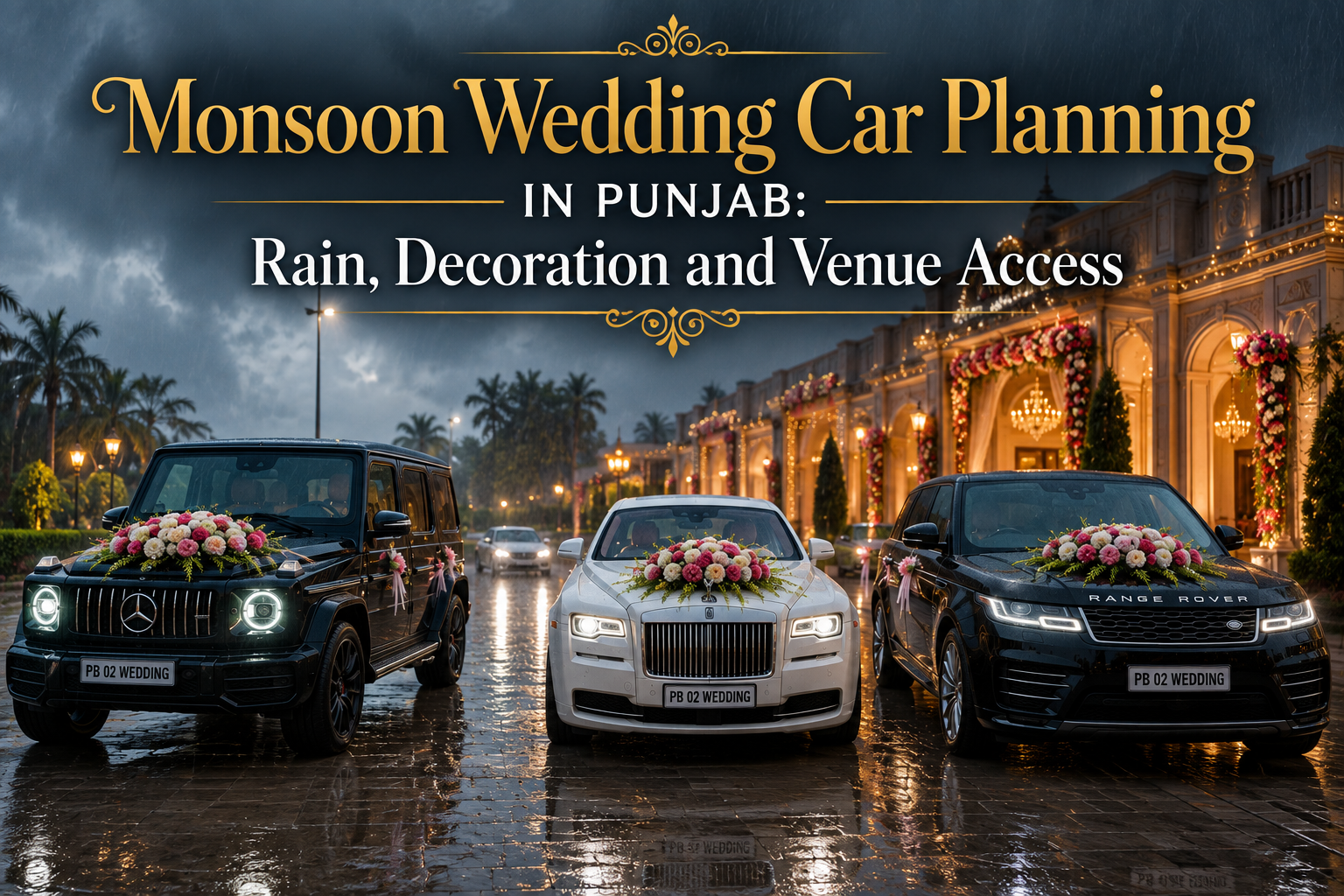
A luxury vehicle photographed with natural rain can still look beautiful. The service becomes premium by adapting intelligently rather than trying to maintain an unrealistic dry-showroom appearance throughout bad weather.
Photograph the Car While It Is at Its Best
If the family wants clean photographs of the wedding vehicle itself, the best opportunity is usually before the larger crowd gathers.
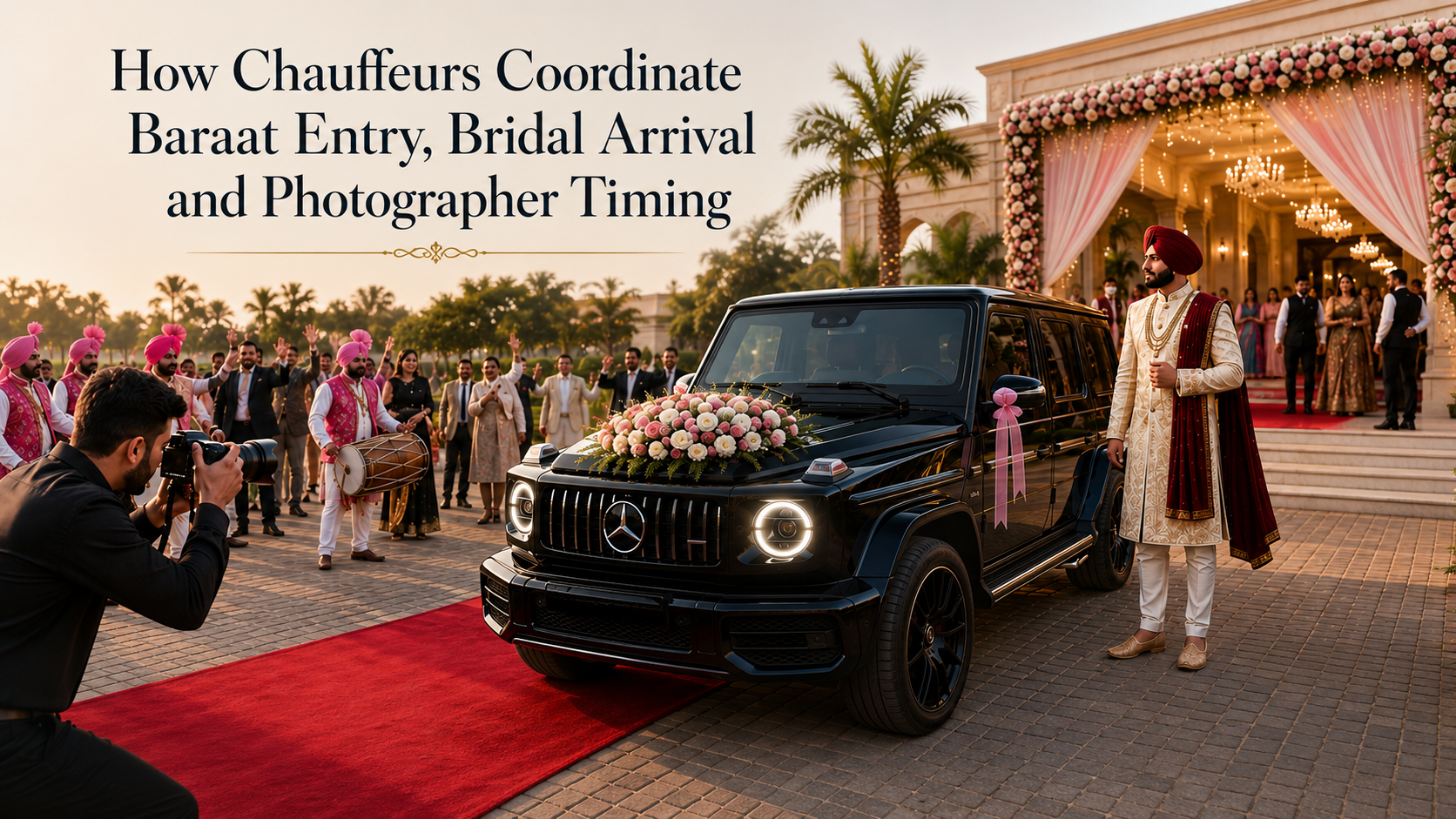
Once the car is fully prepared, the photographer can capture the front, side profile, floral arrangement and important details while the surroundings remain relatively controlled. Afterwards, the groom and family can enter the scene and the photographs can shift towards people and celebration.
Waiting until the baraat has completely surrounded the vehicle can make those clean car photographs much harder. Guests lean against the doors, fingerprints appear and the visual focus becomes the people rather than the vehicle.
A few minutes of deliberate photography before the main departure can therefore preserve the car's best presentation without delaying the wedding later.
Chauffeur Presentation Completes the Vehicle
A luxury wedding car does not arrive alone. The chauffeur is part of what the family sees when the vehicle reports.
A well-prepared car accompanied by an untidy driver does not create a complete premium impression. The chauffeur should therefore be professionally presented, understand the booking and be ready to assist the passenger rather than still organising themselves as the family approaches.
This also affects photography. The chauffeur may naturally appear in the frame while opening the door for the bride, groom or elderly passenger. Their presentation should therefore match the standard of the car without becoming attention-seeking.
Early Reporting Makes Proper Presentation Possible
The importance of early reporting becomes clear once all of these preparation requirements are considered. A chauffeur needs enough time to position the vehicle, inspect the decoration, check the cabin and allow the photographer to work before the passenger is expected to leave.
If a groom is meant to depart at 9:00 AM and the car reaches the property at exactly 9:00 AM, every small adjustment begins delaying the journey. When the vehicle reports earlier, the same adjustments happen quietly while the family is still preparing.
The wedding car then becomes part of an organised schedule rather than another reason the schedule slips.
Doli Is the Wrong Time to Repair the Decoration
By the time bridal doli begins, the family may already have spent many hours at the wedding. The bride is likely to be emotional, photographers are preparing for the farewell and relatives are gathering around the exit.
The car should already be positioned and ready before that moment becomes intense.
If the flowers have moved during the day, they can be checked beforehand. If the cabin needs attention, that should be completed while the bride is still inside. If the route or final destination needs confirmation, the family coordinator and chauffeur should deal with it before the bride reaches the vehicle.
The bride should approach a finished car rather than standing nearby while the car is made ready for her.
Good Presentation Must Survive the Real Wedding Journey
The most important standard is whether the car remains usable and elegant once it leaves the photography area.
A successful decoration is one that stays secure on the road while allowing the driver to use the mirrors, lights, windows, doors, sensors and normal vehicle systems without difficulty. The registration plate remains visible, the passenger can enter comfortably and the cabin stays uncluttered. The car has enough fuel for the assignment and the chauffeur already understands the route, meaning the visual presentation does not come at the expense of operational preparation.
This is what separates genuine wedding-car presentation from simply covering a luxury vehicle with decorative material. The car should look as though every detail belongs there and has been planned around the actual journey.
A Premium Car Usually Looks Better With Restraint
Families sometimes feel that an expensive wedding car needs more decoration because the wedding itself is elaborate. In practice, premium vehicles often benefit from exactly the opposite approach.
A Rolls-Royce Ghost already creates visual impact through its proportions and grille. A Mercedes-Maybach has an unmistakably elegant profile. A G Wagon needs very little help to stand out during a groom arrival, while a Range Rover Sport naturally suits a modern luxury wedding aesthetic.
Flowers and ribbons should therefore emphasise the vehicle rather than compete with it. Leaving clean bodywork visible, keeping the glass clear and allowing the design of the car to remain recognisable usually produces a more sophisticated result in professional photography.
The Finished Car Should Create Confidence Immediately
When the groom walks outside and first sees the car, he should feel that everything is ready. When the bride reaches the vehicle for doli, she should be able to enter without waiting for last-minute cleaning or decoration adjustments. When the photographer begins shooting, the car should already be positioned and prepared rather than becoming another element that needs to be organised.
Punjab Wedding Cars provides chauffeur-driven vehicles through its luxury wedding-car fleet, with models ranging from the Maybach and G Wagon to Range Rover, Rolls-Royce, Jaguar and Audi options. Regardless of which vehicle a family selects, the presentation standard should follow the same principle: prepare the car for the passenger and the real journey first, then add wedding decoration in a way that complements rather than interferes with that preparation.