One Wedding Car or Two? Planning Separate Cars for Bride and Groom
Booking one luxury wedding car for both the bride and groom can look efficient on paper. The groom uses it for his departure and Anand Karaj arrival, the vehicle waits during the ceremony, and later the same car becomes the bridal doli vehicle. In the right wedding, that arrangement can work beautifully. In another wedding, the same idea can create one of the most fragile transport schedules of the entire day because the bride and groom are rarely moving according to exactly the same clock. The groom may need his car for sehra photographs before leaving home, while the bride's transport is already required at a salon or hotel. After the Anand Karaj, the groom may still be using the vehicle for reception photographs when the bride's family wants the bridal car positioned somewhere else. A doli that runs late can extend the booking even further. This is why families using Punjab Wedding Cars should decide between one car and two by looking at the entire wedding timeline rather than simply asking which option costs less.
One Car Works Best When the Wedding Timeline Is Truly Sequential
A single luxury car makes the most sense when the bride and groom need it at different times rather than simultaneously. A straightforward morning Anand Karaj can sometimes create this kind of schedule. The vehicle reports to the groom's home, handles his departure, reaches the Gurudwara and remains available while the ceremony takes place. Once the groom's principal use of the car has finished, the same vehicle can be repositioned for the couple's later movement or bridal doli. The important condition is that there must be enough time between those roles for the chauffeur to move the car, check the presentation and position it properly without rushing. Families considering this arrangement should map the complete day using the Punjab Wedding Cars guide to a home-to-Gurudwara-to-reception Anand Karaj transport timeline, because the feasibility of one car depends far more on the sequence than on the distance between venues.
Two Cars Become Safer When Bride and Groom Preparation Happens at the Same Time
Modern Punjabi weddings increasingly involve separate preparation locations. The groom may be getting ready at his family home while the bride is at a hotel or salon, and both sides may want their luxury car available for photography before anyone leaves. This is where one vehicle quickly becomes impractical. A Mercedes G Wagon G63 AMG cannot be outside the groom's house for baraat photographs while simultaneously waiting for the bride at another location. Trying to solve the problem by moving the same car back and forth introduces road time into a schedule that already contains makeup, family rituals and fixed ceremony timing. Separate cars remove that dependency. The groom's car can report according to his preparation schedule while the bridal car follows the bride's own timeline without either side waiting for the other vehicle to become free.
The Groom's Car Usually Has a More Public Role
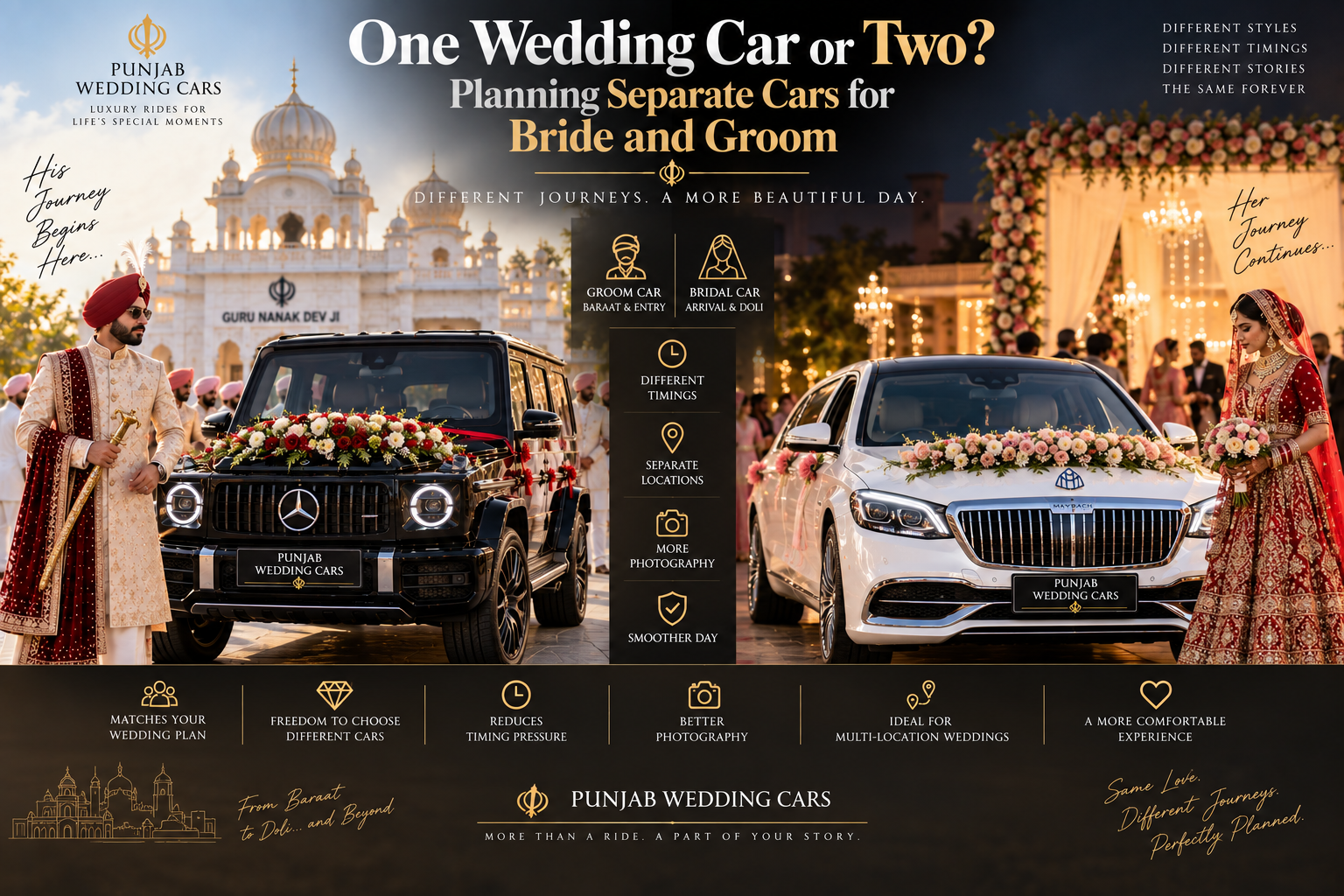
The groom's vehicle is often part of the arrival performance. It may appear in front of the family home, lead a convoy, move slowly with dhol and become the visual centre of the baraat entry. For that reason, cars such as the G Wagon G63 AMG and New Range Rover Sport are frequently chosen because their height and road presence remain visible even when relatives gather around them. A groom may also want the vehicle for an extended photography session before departure. If the same car is expected to become the bride's vehicle immediately afterwards, every extra groom photograph consumes time from the bridal side. Separate cars allow the groom's vehicle to remain part of his celebration without creating pressure for the chauffeur to leave as soon as he steps out.
The Bridal Car Has a More Private and Timing-Sensitive Role
The bride's transport usually has a different character. She may need privacy, rear-seat comfort, easy entry with a large outfit and enough time to leave her preparation location without being hurried. Later, the same vehicle may be required for the doli, when the bride and groom want a quiet journey away from the function. A Mercedes-Maybach, Rolls-Royce Ghost or another rear-seat-focused luxury car can therefore suit the bridal role even when the groom has chosen something more dramatic. Using two vehicles allows each car to be selected for what it actually does. The bride does not have to compromise her transport simply because the groom prefers an SUV, and the groom does not have to abandon a bold entry because the same vehicle will later be used for the bride.
One Car Can Create a Hidden Timing Dependency at the Gurudwara
The biggest risk with a shared vehicle often appears during the Anand Karaj. The groom arrives first, the car is parked, and the family assumes it will simply become available for the bride later. In practice, the vehicle may be blocked by other cars, surrounded by guests or still carrying groom-side decoration that needs adjustment. The photographer may want more groom shots after the ceremony, while the bride's side expects the same car to be repositioned for doli. None of these issues is impossible to manage, but they create a chain where every small delay affects both sides. Punjab Wedding Cars' guide to wedding-car waiting time when a Punjabi wedding runs late explains why ceremony and photography delays should be expected rather than treated as rare exceptions. Two cars break this chain because the bride's vehicle can remain dedicated to her even if the groom's programme changes.
Morning Anand Karaj Weddings Can Make One Car More Practical
An early Sikh wedding often has a cleaner sequence than a long night reception. The groom leaves home, reaches the Gurudwara, the Anand Karaj takes place, and the wedding then continues towards lunch, reception or doli. When all locations are close and the same vehicle genuinely has only one role at a time, using one car can be efficient. The Punjab Wedding Cars guide comparing morning Anand Karaj and night wedding car planning is relevant here because morning weddings reward precise scheduling. If the bride and groom preparation locations are nearby and the doli happens relatively soon after the ceremony, a single Maybach or Range Rover may be able to perform both roles without unnecessary compromise. The family simply needs to confirm that the reporting, waiting and repositioning time are realistic.
Night Weddings Make a Shared Car Harder to Manage
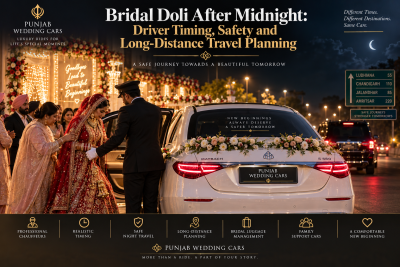
Evening and night weddings create much more schedule drift. The groom's baraat can run later than planned, reception photographs may extend, dinner continues and the doli can move well past midnight. A car that was meant to become the bridal vehicle at 10:30 PM may still be surrounded by groom-side relatives or positioned for reception photography at 11:15 PM. This is one reason separate cars become particularly useful at night. The groom's G Wagon or Range Rover can complete its arrival role without the family constantly watching when it can be released, while the bride's Maybach or Rolls-Royce remains parked and ready for the later doli. Families planning a very late farewell can also use the Punjab Wedding Cars guide to bridal doli after midnight to understand why the final bridal journey should be planned independently from the earlier reception entry.
Separate Cars Can Reduce Waiting Even Though You Are Booking More Vehicles
At first glance, two cars appear to mean paying for more waiting. In some weddings, the opposite is true. The groom's vehicle may only be needed from home through his venue arrival, allowing that assignment to finish relatively early. The bridal car can report later, closer to when the bride actually needs it, rather than sitting unused while the groom completes his entire schedule. This can be more efficient than keeping one premium vehicle committed from early morning until a late doli simply because both sides intend to use it eventually. The Punjab Wedding Cars comparison of full-day versus ceremony-only wedding-car packages is useful for this decision because the best value depends on the real vehicle roles rather than the number of cars alone.
One Car Can Still Be the Better Value for a Shorter Wedding
There are also weddings where booking two separate luxury vehicles would add cost without solving a real problem. If the groom only needs the car for a short departure, the bride is arriving through family transport and the same vehicle is later used for a doli without any timing overlap, a single car may be completely sufficient. A destination-style wedding where both sides are staying in the same resort can also make one vehicle more practical because movement between preparation areas and ceremony spaces is limited. The key is to avoid adding a second car only because it sounds more premium. Separate vehicles should solve a timing, comfort, styling or logistical requirement. If they do not, one well-planned luxury car can create a cleaner transport experience.
Different Cars Allow Different Wedding Styles
Separate vehicles give couples more freedom to create distinct visual identities for the groom entry and bridal doli. The groom may choose a white G63 AMG with red-and-white decoration for a bold baraat, while the bride later travels in a white Maybach with restrained ivory florals. A Range Rover Sport can suit a groom who wants a more refined SUV, while a Rolls-Royce Ghost can create a very formal bridal departure. This approach also means the decoration does not have to be redesigned halfway through the wedding. The groom's car can retain its entry styling while the bridal vehicle is prepared separately for the doli. Couples interested in the visual difference between models can use the Punjab Wedding Cars comparison of G Wagon vs Range Rover vs Maybach for groom entry when selecting the groom's car before pairing it with a more bridal-focused vehicle.
Decoration Can Become a Problem When One Car Changes Roles
A shared wedding car often needs one decoration style to work for two different moments. A bold red floral arrangement that looks excellent with the groom's maroon turban may not be the bride's preferred look for the doli. The family can certainly choose a neutral arrangement that suits both, but this is another area where the single-car plan creates compromise. Separate vehicles allow one decoration to match the groom's outfit and another to work with the bride's wedding palette. The car also avoids being handled repeatedly while florists attempt to remove or change decoration between functions. This becomes especially relevant during hot weather because fresh flowers may already have been exposed for several hours before the bridal portion of the day begins.
Photography Becomes Easier With Dedicated Bride and Groom Cars
Wedding photographers frequently want the groom's car before the baraat and the bridal car later during the doli. When those are the same vehicle, photography time has to fit around repositioning. The photographer may finish a groom shoot only to realise the car needs to leave immediately for the bride. With separate vehicles, each car can already be placed where the relevant photographs happen. The groom's vehicle can remain outside the palace or farmhouse after his arrival while the bridal car waits in a cleaner, quieter area for the later departure. This is particularly useful at large venues where moving a luxury vehicle from one side of the property to another can take longer than expected once guest traffic builds.
Intercity Weddings Strongly Favour Separate Vehicles
One-car planning becomes far more fragile when bride and groom are travelling from different cities or districts. If the groom begins in Jalandhar and the bride is preparing in Ludhiana, one car cannot sensibly perform both roles without significant dead travel and timing risk. Even when both sides eventually meet at one Gurudwara, the pre-ceremony transport should normally be independent. The same applies when the bride's final doli is long-distance. A groom's G63 may finish its job at the reception while the bride's Maybach remains dedicated to a later journey towards another district. Intercity weddings should therefore be planned around the true pickup and final drop addresses rather than assuming the shared venue makes one vehicle practical.
A Long-Distance Doli Is a Strong Reason to Use a Separate Bridal Car
If the bride and groom will travel for one or two hours after the wedding, the doli car has a much more important comfort role than the groom's entry vehicle. The groom may select a G Wagon because he wants a bold baraat arrival, but that does not automatically make it the ideal vehicle for a long late-night couple journey. A separately booked Maybach, Range Rover or Rolls-Royce can report later, remain fresh and be prepared specifically for the doli. The Punjab Wedding Cars guide to luxury wedding cars for long-distance bridal travel explains why rear-seat comfort, luggage and the actual route should influence the bridal vehicle. A separate car also means the groom's entry vehicle does not need to remain committed for hours simply because the couple needs transportation much later.
Bridal Luggage Can Make the Two-Car Option More Practical
The bride's final journey can involve luggage, garment bags and personal belongings that were not part of the groom's earlier transport. If one car is being used for both sides, the family may have to clear groom-side items, decoration materials or other belongings before loading the bridal essentials. A dedicated bridal vehicle provides a cleaner arrangement because its boot and cabin can be prepared specifically for the couple. Larger luggage should still travel in a separate support vehicle, particularly for a long-distance doli, but the bridal car itself remains uncluttered. The Punjab Wedding Cars Bridal Doli Transport Checklist is useful for families deciding which belongings should remain with the bride and which should travel separately.
Two Cars Help When Bride and Groom Are Staying at Different Hotels
Hotel-based weddings often look geographically simple because every function may be within the same city, yet bride and groom can still begin from different hotels or even different parts of the same large resort. Both may have photographers, family members and their own departure schedules. One vehicle then has to keep moving between preparation locations, potentially through hotel traffic and valet areas, while both sides are waiting for it. Separate cars remove this unnecessary dependency. The groom can leave for his entry when his side is ready and the bride can remain on her own schedule. Once both arrive at the venue, the cars can either finish their assignments or remain available according to the later wedding plan.
Parents Should Not Become the Backup Transport Solution
When families try to make one wedding car perform two overlapping roles, parents or relatives often end up solving the gap with personal vehicles. The groom takes the luxury car, the bride is told she can use a relative's SUV temporarily, and later everyone switches again before the doli. This can work, but it often defeats the reason for organising professional wedding transport in the first place. If the bride genuinely needs a dedicated luxury vehicle, it is better to recognise that during planning than to rely on whichever family car happens to be nearby. Parent vehicles should remain available for the parents rather than becoming emergency replacements for the couple.
One Car Requires Better Communication Between Both Families
A shared vehicle only works when both sides have a single coordinated timeline. The groom's family must understand when the car needs to be released, the bride's side must know when it will realistically arrive, and the chauffeur should receive instructions from one responsible coordinator rather than two families calling independently. A groom-side relative cannot suddenly add an extra photography stop if the bridal side is already waiting for the same vehicle. Similarly, the bride's family cannot move the doli earlier without checking whether the car is still completing another assignment. One vehicle can save cost, but it increases coordination. Two vehicles cost more, yet each side gains much more scheduling independence.
Separate Cars Protect the Wedding From One Delay Affecting Both Sides
This is perhaps the strongest reason to book two vehicles. If the groom's car is delayed by traffic, that delay remains on the groom's side rather than automatically becoming a bridal transport delay later. If the bride's makeup runs late, the groom's vehicle can still complete its own assignment without waiting. Punjab Wedding Cars' guide on what happens if a wedding car is delayed by traffic explains why wedding transport works best when fixed ceremony timings are protected from dependencies that can be removed. Separate cars do exactly that. They create two independent transport schedules that only need to meet at the ceremony rather than constantly borrowing time from one another.
One Car Can Be More Romantic When It Truly Works
There is still something appealing about one signature wedding car being present throughout the couple's story. The groom arrives in it, the car appears in Anand Karaj photographs and later the bride and groom leave together in the same vehicle. When the timing is simple, the locations are close and the decoration works for both sides, this can create strong visual continuity in the wedding album. Families should not feel that two vehicles are automatically more luxurious. One car can be the more elegant choice when it genuinely fits the day rather than being forced into overlapping jobs.
Two Cars Usually Win for Complex Punjabi Wedding Timelines
As soon as the wedding includes separate hotels, simultaneous preparation, long photography sessions, different venue entrances, an evening reception or a late doli, the advantages of two vehicles grow quickly. The groom can choose the car that best suits his arrival, the bride can choose the vehicle that best suits her comfort and departure, and both chauffeurs can work from independent reporting times. The family also gains flexibility if one side of the wedding runs late. This is especially useful in large NRI weddings where photographers, planners, hotel movements and multiple venues already make the transport schedule more complex.
Choose According to the Jobs the Cars Need to Perform
The decision between one wedding car and two should not begin with the number of luxury vehicles you want in the photographs. It should begin by following the bride and groom separately through the day. If neither needs the car at the same time, one vehicle can be efficient and visually cohesive. If their schedules overlap, if their preferred cars are different, if the groom has a long public entry while the bride needs private transport, or if the bridal doli happens hours later, separate vehicles usually create a safer and more comfortable plan.
Punjab Wedding Cars offers a wider luxury wedding-car fleet that allows couples to build either approach. A groom can use a G Wagon G63 AMG or New Range Rover Sport for the baraat while the bride travels separately in a Mercedes-Maybach, Rolls-Royce Ghost, Jaguar XJL or another chauffeur-driven luxury vehicle. Alternatively, one carefully scheduled car can remain the signature vehicle throughout a simpler wedding day.
The most useful question is not whether one car is cheaper than two.
It is whether one car can genuinely be in every place the bride and groom need it without asking either side to wait.
If the answer is yes, a single luxury wedding car can work beautifully. If the answer requires phrases such as “as long as the groom is not late,” “if photography finishes quickly,” or “provided the doli happens on time,” two separate cars are usually the stronger wedding transport plan.