What to Check Before Booking a Luxury Wedding Car for a Village Wedding
A village wedding in Punjab can involve a very different transport plan from a wedding taking place entirely inside Jalandhar, Ludhiana, Amritsar, Chandigarh or another large city. The wedding car may begin its journey on a major highway, turn onto a district road, continue along a link road between fields, enter a village through a busy market or narrow residential street, stop at a family home, travel to a Gurudwara Sahib and later continue to a marriage palace several kilometres away. That means choosing a luxury wedding car should involve more than deciding which vehicle looks best in photographs. Before confirming a booking, the family should consider the exact pickup location, village access, road width, parking, ground clearance, wedding timings, the location of the Anand Karaj or ceremony, the reception venue and where the car will wait between functions. Punjab Wedding Cars regularly handles chauffeur-driven wedding transport throughout Punjab, and village weddings are a good example of why route planning can be just as important as choosing the car itself.
Give the Wedding Car Company the Exact Village, Not Just the District
One of the first details to confirm is the actual village rather than simply saying that the wedding is in Ludhiana district, Jalandhar district, Hoshiarpur, Kapurthala, Moga, Patiala or Amritsar. Two villages within the same district can require completely different approaches. One may sit a few minutes from a national highway while another may require twenty or thirty minutes on connecting roads after leaving the main route. Even the same village can have several possible entrances, and a navigation app may not always select the entrance that is most suitable for a long or low luxury car. When arranging a luxury wedding car with Punjab Wedding Cars, provide the house location, village name, nearby town, district, a Google Maps pin if available, and the name of the Gurudwara Sahib or marriage palace involved in the wedding schedule. If the bride's home is deep inside the village but there is a wider road or open meeting point nearby, discussing that information beforehand can help the chauffeur plan the final approach rather than trying to solve it while the wedding programme is already running.
Check the Last Few Kilometres of the Route Carefully
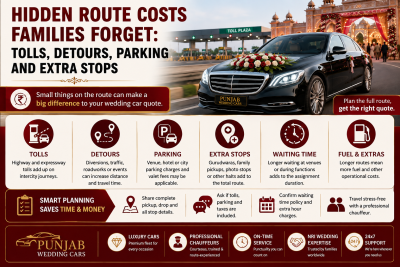
Families often focus on the distance between major cities while overlooking the final two or three kilometres, yet that short section can have the greatest effect on a luxury wedding vehicle. Punjab's main highways and larger district roads are generally straightforward for premium cars, but the final village approach may include narrow turns, uneven shoulders, speed breakers, temporary road repairs, agricultural traffic or sections where two vehicles cannot comfortably pass together. Conditions can also change after heavy rain or local construction. If you already know that the village road contains an unusually steep entrance, an unpaved section or a difficult turn, tell the wedding-car provider before selecting the vehicle. This does not automatically mean that a premium vehicle cannot reach the location. It simply allows the company to assess the route properly and decide whether the selected car should go directly to the house or whether a nearby wider pickup point would produce a smoother wedding-day experience.
Choose the Car for the Route as Well as the Photographs
A low luxury saloon and a luxury SUV create very different wedding arrivals, and village access can make that distinction important. A Mercedes Maybach gives the bride or couple an exceptionally refined rear-seat experience and works beautifully when the route from the home to the ceremony venue is well surfaced and easily accessible. A new Range Rover Sport, on the other hand, offers a commanding appearance together with the higher stance that many families prefer when the wedding involves a combination of highways, village roads and rural venue entrances. For a groom who wants a stronger visual presence during the baraat, the Mercedes G Wagon G63 AMG can suit the character of a large Punjabi wedding extremely well. The correct choice is therefore not simply the most expensive car or the model currently attracting the most attention. It is the vehicle that suits the couple, the route and the way the wedding day is actually organised.
Think About the Bride's Dress Before Choosing the Rear Seat
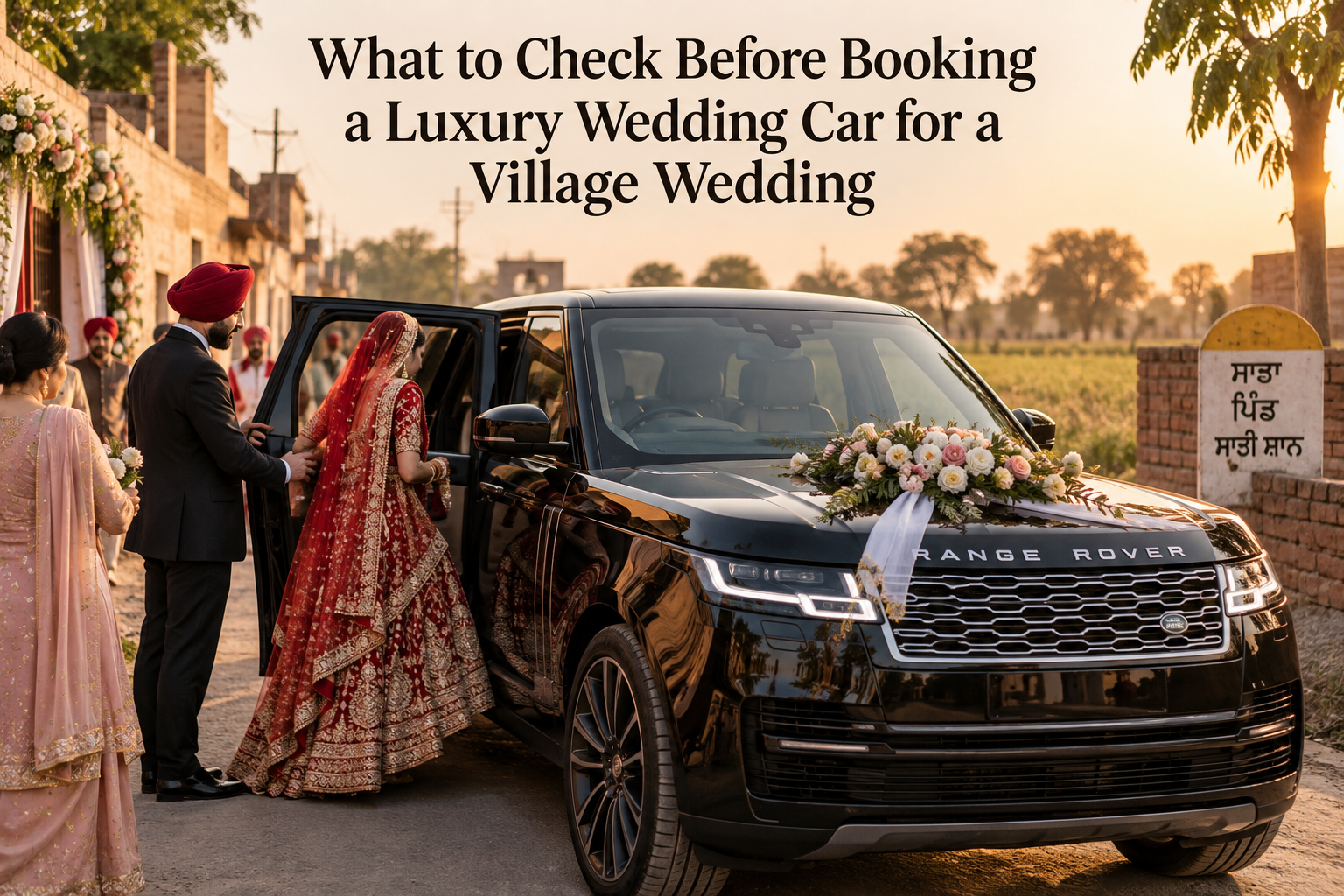
For bridal transport, rear-seat comfort deserves considerably more attention than it often receives. A bride may be travelling in a heavily embroidered lehenga, carrying a dupatta arrangement that needs space, wearing jewellery that makes getting in and out more delicate, and sometimes travelling with a sister, mother or another close family member. The car therefore needs to work in practical terms as well as looking elegant when it arrives. Large rear doors, comfortable seating, effective air conditioning and enough room to settle the outfit properly can make the journey from the family home to the ceremony or from the wedding venue during the doli noticeably calmer. The Rolls-Royce Ghost is an especially dramatic option when families want an unmistakably prestigious arrival, while the Maybach offers a more understated luxury-saloon experience. An SUV such as the Range Rover Sport can be preferable for couples who like its elevated seating and more substantial road presence. The decision should ultimately reflect both the bride's comfort and the physical conditions of the route.
Check the Entrance to the House, Gurudwara and Marriage Palace
The route may be perfectly suitable until the wedding car reaches the actual entrance. Village homes can sometimes be approached through tight residential lanes, while farmhouses and marriage palaces may have decorative gates, ramps, temporary floral structures or crowded arrival areas. Gurudwara Sahib parking can become particularly busy when several families and baraat vehicles arrive around the same time. Before the wedding, consider where the chauffeur should stop, where photographers want the car positioned and whether the vehicle can turn around without becoming trapped between parked cars. The same thinking applies to the doli. A beautiful luxury vehicle loses much of its impact if the driver has to reverse through a congested lane while dozens of other cars are trying to leave simultaneously. A simple discussion between the family, wedding planner and chauffeur about the preferred entry and exit point can prevent unnecessary confusion and allow the bride or groom to step into the car in a calmer, more organised setting.
Do Not Assume the Wedding Car Only Needs to Make One Journey
Village weddings often involve several separate movements during the same booking. The groom may leave his village for the bride's location, travel with the baraat to a Gurudwara Sahib or ceremony venue, continue to a marriage palace for the reception and later use the same vehicle for the departure. The bridal car may have a completely different schedule, particularly where the Anand Karaj takes place in one location and lunch or reception functions are held elsewhere. This is why the booking should clearly state every planned movement rather than only the first pickup and final destination. If the car must return to the village between events, wait outside the venue for several hours or move to another location for photography, that information should be discussed at the quotation stage. A wedding car company can plan far more effectively when it knows the full programme, and the family can also understand what is included in the booking rather than making assumptions about additional journeys on the wedding day.
Allow More Time Than a Normal Navigation Estimate
Google Maps may tell you how long an ordinary car journey should take, but a Punjabi wedding procession does not always travel like ordinary traffic. A groom's departure can run late because relatives are still assembling, the photographer may request additional shots before the car moves, the baraat convoy may travel at a slower pace and village roads can become congested when many guests leave together. Tractors, buses, school traffic, railway crossings and market areas can also affect the approach to certain villages. For bridal transport, the car may need to arrive well before the planned departure so there is no pressure while final photographs and family traditions are taking place. Building realistic buffer time into the wedding transport plan is particularly important when the ceremony has a fixed schedule. The objective is not to rush the family; it is to make sure the chauffeur and vehicle are already in position when the couple actually needs them.
Ask Where the Car Will Wait During the Ceremony
Waiting arrangements matter more at a village wedding than many couples realise. A luxury car may arrive at the Gurudwara Sahib in the morning and not be needed again until the ceremony finishes, or it may remain at a marriage palace while lunch, photographs and family ceremonies continue for several hours. The family should identify a suitable waiting area where the vehicle is safe, accessible and unlikely to be blocked by guest cars. Parking directly beside a busy entrance is not always the best choice, especially when buses, tractors, DJs, catering vehicles and guest cars are constantly moving through the same area. A professional chauffeur should remain coordinated with the family so that the car can be brought forward at the correct moment rather than sitting unnecessarily in the middle of the wedding activity. For the bride's doli, this coordination becomes especially important because departure timing can change depending on ceremonies, photography and family traditions.
Consider the Weather and Ground Conditions
Punjab weddings take place through very different seasons, and the condition of rural approaches can change accordingly. During hot weather, a properly prepared air-conditioned cabin is essential, particularly for a bride wearing heavy wedding clothing. In winter, early-morning fog can affect travel times between villages and cities, so a schedule that appears generous on paper may still require additional allowance. During periods of rain, an open parking field or unpaved farmhouse approach can become less suitable for a low luxury saloon. None of these factors should discourage a family from booking the car they genuinely want, but they should influence the transport plan. If the wedding venue uses an open field for overflow parking, it may be better for the luxury wedding car to use a paved entrance or designated drop-off point while ordinary guest vehicles park farther away. Protecting the vehicle's condition also protects the appearance of the couple's arrival photographs.
Make Sure the Chauffeur Knows Village Wedding Etiquette and Timing
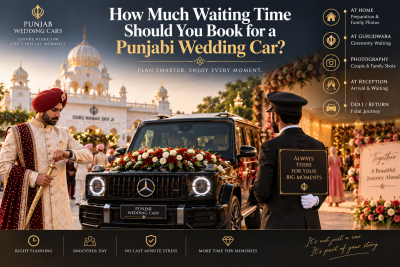
A luxury vehicle is only one part of a premium wedding-car service. The chauffeur's ability to stay composed around a busy Punjabi wedding can have an equally important effect on the experience. The driver may need to communicate with the groom's brother, bride's family, wedding planner, photographer or venue staff while hundreds of guests are arriving. He may need to move the car temporarily for the photographer, wait while the baraat enters, reposition for the doli or follow another family vehicle to a location that was not clearly marked on the original route. A chauffeur who understands wedding-day timing will avoid creating pressure simply because the programme is running fifteen or thirty minutes late. Punjab Wedding Cars provides chauffeur-driven vehicles rather than handing over premium wedding cars as ordinary self-drive rentals, which is particularly useful for village weddings where route knowledge and on-the-day coordination can matter as much as the vehicle itself.
Check Whether a Saloon, SUV or Limousine Really Fits the Village
Large wedding vehicles create memorable entrances, but size should be considered realistically. A Jaguar XJL or Audi A6 can be an elegant option for families wanting a traditional luxury-saloon appearance without the visual bulk of a large SUV. A Range Rover Sport has a different character and can feel especially appropriate when a wedding involves country roads, large marriage palaces or farmhouse venues. The G Wagon gives the groom's arrival a bold, unmistakable profile and suits couples who want the car itself to become part of the baraat imagery. Stretch limousines need even more route planning because their length affects turning space and access through narrow lanes. Before choosing any vehicle simply because it looks impressive online, think about the narrowest road, sharpest turn and most restricted entrance it will encounter during the actual wedding.
Inspect the Car Details Before Paying an Advance
Couples should know exactly which vehicle they are reserving. Ask for current photographs or view the relevant vehicle details rather than assuming that every Maybach, Range Rover or G Wagon offered by different companies is equivalent. Confirm the model, colour, expected decoration, passenger use and whether the booking is chauffeur-driven. It is also sensible to discuss what happens if unexpected mechanical or operational circumstances affect the booked vehicle and what alternative arrangements the company follows. Families organising from Canada, the UK, Australia, the United States or another country should be especially careful because relatives in Punjab may be handling the physical arrangements on their behalf. Sharing the booking confirmation, route, vehicle choice and coordinator's contact details with both sides of the family reduces the risk of different people working from different information. Punjab Wedding Cars' current luxury fleet allows families to compare different vehicle styles before deciding which one best fits the wedding.
Clarify What the Quotation Covers
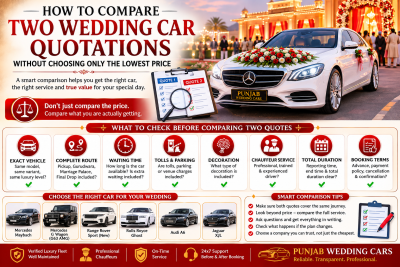
The cheapest quotation is not necessarily the most useful quotation if it leaves important parts of the wedding undefined. The family should understand the pickup point, destination, planned hours, waiting requirements, additional movements, decoration arrangement and any circumstances that could change the final cost. Village weddings can involve significant waiting time or additional kilometres if the car must travel from one family's village to another location, return to a hotel, attend a separate reception venue or make a late-night doli journey. Rather than focusing only on a single headline price, compare what each company is actually agreeing to provide. A quotation for a straightforward city-to-palace transfer is not automatically comparable with a booking that keeps the same chauffeur and luxury vehicle available through several wedding functions. Clear information before the advance is paid protects both the family and the wedding-car provider from misunderstandings later.
Plan Photography Without Blocking the Wedding Route
Luxury wedding cars naturally become part of the photography, particularly when a Maybach, Rolls-Royce, Range Rover or G Wagon is involved. Village surroundings can provide beautiful visual settings, including tree-lined roads, open agricultural landscapes, traditional homes and the approach to a farmhouse or marriage palace. However, photography should be planned around safe and practical stopping locations. The chauffeur should not be expected to stop on a narrow village link road simply because a particular angle looks attractive, especially when agricultural or local traffic needs to pass. A wider private driveway, venue approach or quiet paved area can produce excellent photographs without disrupting the journey. The car should also be positioned respectfully around religious venues; the purpose of wedding photography is to complement the occasion, not to obstruct the entrance or turn the sacred setting into a vehicle display.
Coordinate the Baraat Convoy Before Leaving the Village
A groom travelling in a premium wedding car is often accompanied by a substantial convoy. That convoy can include close family cars, buses, photographers, relatives arriving separately and sometimes vehicles carrying wedding equipment. If everyone tries to follow the groom's car continuously through village roads, the procession can become stretched out or create unnecessary congestion. It is usually better for key vehicles to understand the route and destination independently rather than relying entirely on following the wedding car in front. The chauffeur's responsibility should remain the safe and comfortable transport of the groom, not keeping fifty guest vehicles together at every junction. When the wedding takes place in another village or district, sharing the marriage palace and Gurudwara Sahib location with guests in advance can considerably reduce confusion. The luxury car can then travel smoothly rather than repeatedly stopping because somebody at the back of the convoy has taken a wrong turn.
Have One Family Contact Responsible for the Wedding Car
One of the simplest ways to improve village wedding transportation is to nominate a single reliable family contact. On the wedding morning, the chauffeur should not receive conflicting calls from the bride's cousin, groom's uncle, photographer, wedding planner and several relatives giving different instructions. One coordinator who knows the complete programme can tell the driver when the groom is ready, when the bridal departure has moved, whether the ceremony is running late or whether the car needs to change its waiting location. This is especially valuable for NRI weddings, where the couple may have planned much of the event from overseas but operational decisions are being handled by relatives in Punjab. A clear line of communication allows the chauffeur to concentrate on presentation, positioning, route and timing instead of trying to determine which instruction is authoritative.
The Best Village Wedding Car Is the One That Fits the Complete Plan
Booking a luxury wedding car for a village wedding should combine appearance, comfort and practical route planning. The Maybach may be the ideal bridal car for one family, while a Range Rover Sport may better match another wedding's route and venue setting. The G Wagon may suit a groom wanting a commanding baraat arrival, while the Rolls-Royce Ghost can create a more formal luxury statement. What matters is that the vehicle can comfortably complete the journeys required of it and that the chauffeur understands where, when and how the family expects it to operate. Before paying the advance, confirm the exact village, route, pickup location, ceremony venue, reception location, waiting arrangement, road access, vehicle choice and wedding-day contact person. When those details are handled in advance, the luxury car stops being another item on the wedding checklist and becomes what it should be: a calm, well-organised part of the couple's journey through the day.