Wedding Chauffeur Etiquette: Privacy, Dress, Communication and Family Coordination
A luxury wedding chauffeur does much more than drive a beautiful car from one address to another. On a Punjabi wedding day, the chauffeur may arrive while the groom is still getting ready, wait outside a family home during Sehra Bandi, drive through a busy baraat route, position the car for photographers, wait through an Anand Karaj, move between a Gurudwara and marriage palace and later remain available for a bridal doli that finishes much later than originally expected.
During those hours, the chauffeur is temporarily present during some very private family moments. That makes professional etiquette important. Families should be able to expect a chauffeur who is properly presented, discreet around conversations, calm when the wedding timetable changes, careful about who gives instructions and professional with the bride, groom, parents, grandparents and guests.
Punjab Wedding Cars provides chauffeur-driven luxury wedding cars across Punjab, and the quality of the service should be judged by more than the condition of the vehicle. The chauffeur is part of the experience from the moment the car reports at the pickup point until the final passenger reaches the destination. In many cases, excellent chauffeur service is noticeable because the family never needs to worry about what the driver is doing.
Professional Presentation Starts Before the Passenger Enters
The chauffeur becomes part of the wedding presentation before the vehicle begins moving. Imagine a carefully prepared Mercedes-Maybach outside the bride's home, with floral decoration, professional photography and family members dressed formally for the ceremony. A chauffeur who appears untidy or dressed too casually can immediately reduce the premium impression created by the vehicle.
A professional wedding chauffeur should therefore be clean, smartly dressed and understated. Their appearance should complement the luxury vehicle rather than attract attention away from the bride or groom. This is particularly important because the chauffeur may appear naturally in photographs while opening a door, positioning the car or standing near the vehicle during an arrival.
The aim is not theatrical presentation. It is consistency. If the family has booked a premium chauffeur-driven wedding car, the chauffeur should look as carefully prepared as the vehicle itself.
Cleanliness Is Part of Chauffeur Etiquette
Professional presentation does not end with clothing. The condition of the passenger cabin matters even more because that is where the bride, groom or family will spend their journey.
Before reporting, the chauffeur should make sure the passenger area is clean, uncluttered and free from unnecessary personal items. Food packaging, cleaning cloths, bottles and other driver belongings should not be scattered around the cabin. The rear seating area should be ready for the passenger rather than needing to be reorganised after they arrive.
This becomes particularly important with bridal transport. A bride may be wearing an expensive lehenga, heavily embroidered suit or delicate dupatta, and the interior needs to provide enough clean space for her to enter and settle comfortably. A luxury car is not fully prepared simply because the exterior has been polished. The part the passenger touches, sits in and experiences throughout the journey needs the same attention.
The Chauffeur Should Know the Route Before Reporting
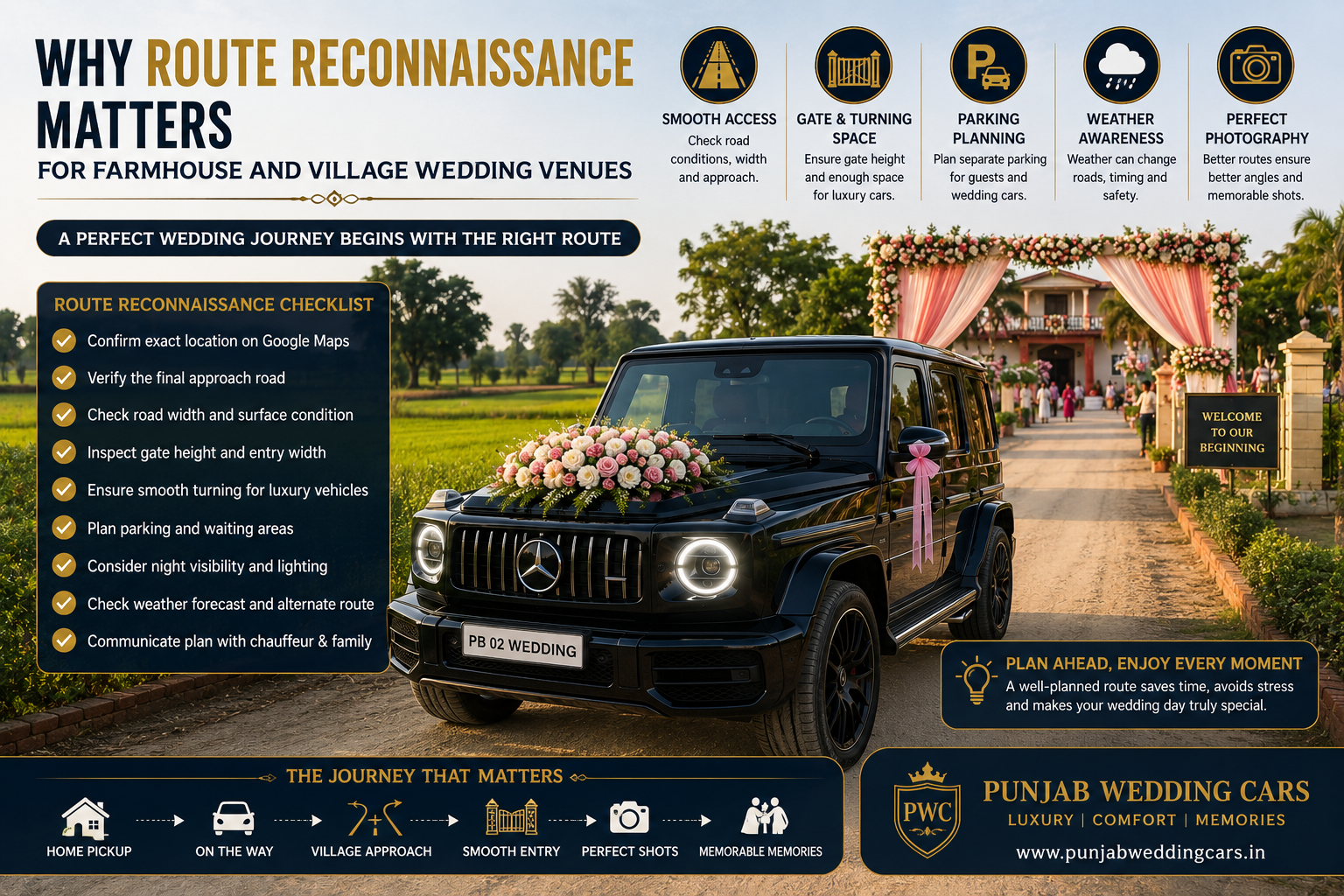
A professional chauffeur should not arrive at the groom's home and then begin asking where the wedding is taking place. The fundamental journey should already have been confirmed through the booking and family coordinator.
The pickup point, Gurudwara Sahib, reception venue, major stops and final drop should be known before the principal passenger enters the car. Where the last approach to a village, farmhouse or unusual entrance needs clarification, a designated local contact can help, but the bride or groom should not be searching for locations from the back seat.
This is why accurate booking information matters. Punjab Wedding Cars' online wedding-car booking process emphasises confirming the vehicle, wedding date, pickup, drop, reporting time, route and related journey information before the actual wedding assignment.
Preparation is part of chauffeur etiquette because a prepared driver creates a calmer passenger experience.
Privacy Is Essential in a Bridal Car
A bridal car is a particularly private environment. The bride may travel with her mother, sister, husband or another close relative, and the conversations inside the vehicle may involve emotional family matters, wedding arrangements or personal discussions.
The chauffeur should treat anything heard inside the vehicle as private. They should not comment on family disagreements, repeat conversations afterwards or become involved in subjects that do not concern the journey. After doli, the bride may simply want quiet rather than conversation, and a professional chauffeur should understand that immediately.
Luxury service includes discretion. The passenger should feel that the rear cabin is a private space even though another person is driving the vehicle.
Friendly Communication Should Never Become Intrusive
There is nothing wrong with a polite chauffeur greeting the family and speaking naturally when a passenger starts a conversation. Punjabi hospitality is warm, and a completely silent interaction is not always necessary.
The important difference is between being friendly and being intrusive. A chauffeur does not need to ask the bride where she will be living after marriage, question an NRI guest about their salary or visa, discuss the family's property or ask what the wedding cost. These subjects are personal and have nothing to do with the transport assignment.
The best chauffeur reads the mood of the passenger. Some people want a short conversation, while others want silence. Professional service adjusts to the passenger rather than forcing a particular type of interaction.
Wedding Photographs Belong to the Family
Luxury wedding cars naturally attract photographs. A Rolls-Royce Ghost, G Wagon, Range Rover or Maybach outside a decorated Punjabi wedding venue can be visually impressive, and chauffeurs may witness moments that would look excellent on social media.
That still does not mean the chauffeur should photograph the bride, groom or family without permission. Private photographs, family conversations, venue information and real-time movements should not automatically become personal social-media content for the driver.
If a transport company has agreed with the family that certain photographs may be taken for business purposes, that is a separate matter. Otherwise, the respectful professional assumption should be that the family's wedding remains private.
This becomes particularly important with NRI weddings, celebrity guests, business families or anybody who prefers not to have their location or wedding activities published in real time.
Real-Time Doli Locations Should Remain Private
Doli can take place late at night and may involve a long journey to another city, town or village. Posting a video showing the bridal vehicle leaving the venue can reveal where the couple is travelling, what car they are using and roughly when the journey started.
There is rarely any professional reason for the chauffeur to broadcast that information publicly. The same principle applies to airport pickups involving international guests.
A premium chauffeur service should make passengers feel that their movement is being handled discreetly. Marketing opportunities should never take priority over the privacy of the family being served.
The Bride Should Not Be Managing Chauffeur Communication
A well-organised bridal journey should have one responsible family coordinator handling transportation. That person knows the vehicle, chauffeur contact, luggage arrangement and final destination.
The Bridal Doli Transport Checklist follows the same practical approach by recommending that one trusted person manage the bridal transport rather than leaving the bride responsible for logistics.
If doli is delayed, the chauffeur should communicate with the coordinator. If the final destination needs clarification, the same person can deal with it. If another gate is being used at the venue, the coordinator can provide the update.
The bride should be treated as the passenger, not as the transport dispatcher.
The Groom Should Receive the Same Courtesy
A groom's wedding morning may also involve several moving parts. The chauffeur may report while Sehra Bandi is still underway, photographers may want the car repositioned, friends may be organising the baraat and family members may be asking when departure will happen.
If the groom is using a Mercedes G Wagon G63 AMG, Range Rover Sport or another statement vehicle, the car itself may also attract additional attention outside the home.
One groom-side coordinator should therefore handle transport communication. If departure is delayed, that person informs the chauffeur. If a photography position changes, one agreed person gives the instruction. The groom should not spend the wedding morning receiving transport calls while trying to get ready.
One Family Coordinator Prevents Conflicting Instructions
A wedding chauffeur can easily receive contradictory directions when several family members believe they are helping. One uncle may tell the driver to go directly to the reception, while a cousin asks for a photography stop and another relative tells the chauffeur to wait outside Gurudwara Sahib.
Without a clear authority structure, the driver has no way of knowing which instruction represents the actual family plan.
One coordinator solves that problem. Changes can still be made, but they come through one recognised person. This is especially important for the bride's and groom's principal cars, which should not be redirected casually for unrelated family errands.
Punjab Wedding Cars' NRI guidance follows a similar communication principle by recommending one main overseas decision-maker and one local Punjab coordinator for remote wedding planning. The same structure works extremely well on the wedding day.
Professional Chauffeurs Should Confirm Major Changes
Being helpful does not mean accepting every instruction from every person standing near the car. If somebody suddenly asks the chauffeur to abandon the agreed assignment and take another guest elsewhere, it is reasonable to confirm the request through the designated coordinator.
This protects the family as much as the driver. A Mercedes-Maybach reserved for bridal doli should not disappear on another journey simply because a relative asked the chauffeur for a quick favour.
A defined wedding car should remain focused on its booked responsibility unless the authorised coordinator genuinely changes the plan.
Communication Should Be Short and Useful
Professional communication should give the family exactly the information required. A simple message saying that the vehicle has reached the pickup point, is positioned at the entrance or needs confirmation of a particular reception gate can be far more useful than a series of repeated calls.
There are times when a telephone call is necessary, especially if a gate is closed, the family has changed pickup location or an urgent routing decision needs to be made. At other times, a brief message to the coordinator is less disruptive.
The chauffeur should understand that the coordinator may temporarily be inside Gurudwara Sahib and unable to answer immediately. The communication method should respect the wedding rather than demanding constant attention from the family.
The Couple Should Not Receive Calls During Anand Karaj
Once the bride and groom are inside the ceremony, ordinary transport questions should go somewhere else.
If the chauffeur needs to know whether the car should move, which reception gate is being used or where parents are travelling, the designated family contact should be the first person contacted.
This is another reason the family coordinator is so useful. The chauffeur gets a reliable operational contact, while the bride and groom remain focused on the Anand Karaj rather than receiving messages about parking and vehicle positioning.
Good wedding transport should reduce the couple's involvement in logistics as the day progresses.
Waiting Should Be Handled Professionally
Punjabi weddings frequently run later than the printed schedule. Photography takes longer, relatives need additional time, the reception programme changes and doli may happen significantly later than expected.
A professional chauffeur should not repeatedly show frustration to the passengers. If waiting time becomes an operational or commercial issue, that conversation belongs between the appropriate booking contact and family coordinator.
At the same time, families should be realistic when providing the expected schedule. If doli is likely to happen late at night, the booking should reflect that rather than using an unrealistically early time simply because the formal programme ends sooner.
Respectful chauffeur service works best when both the transport provider and family understand the real assignment.
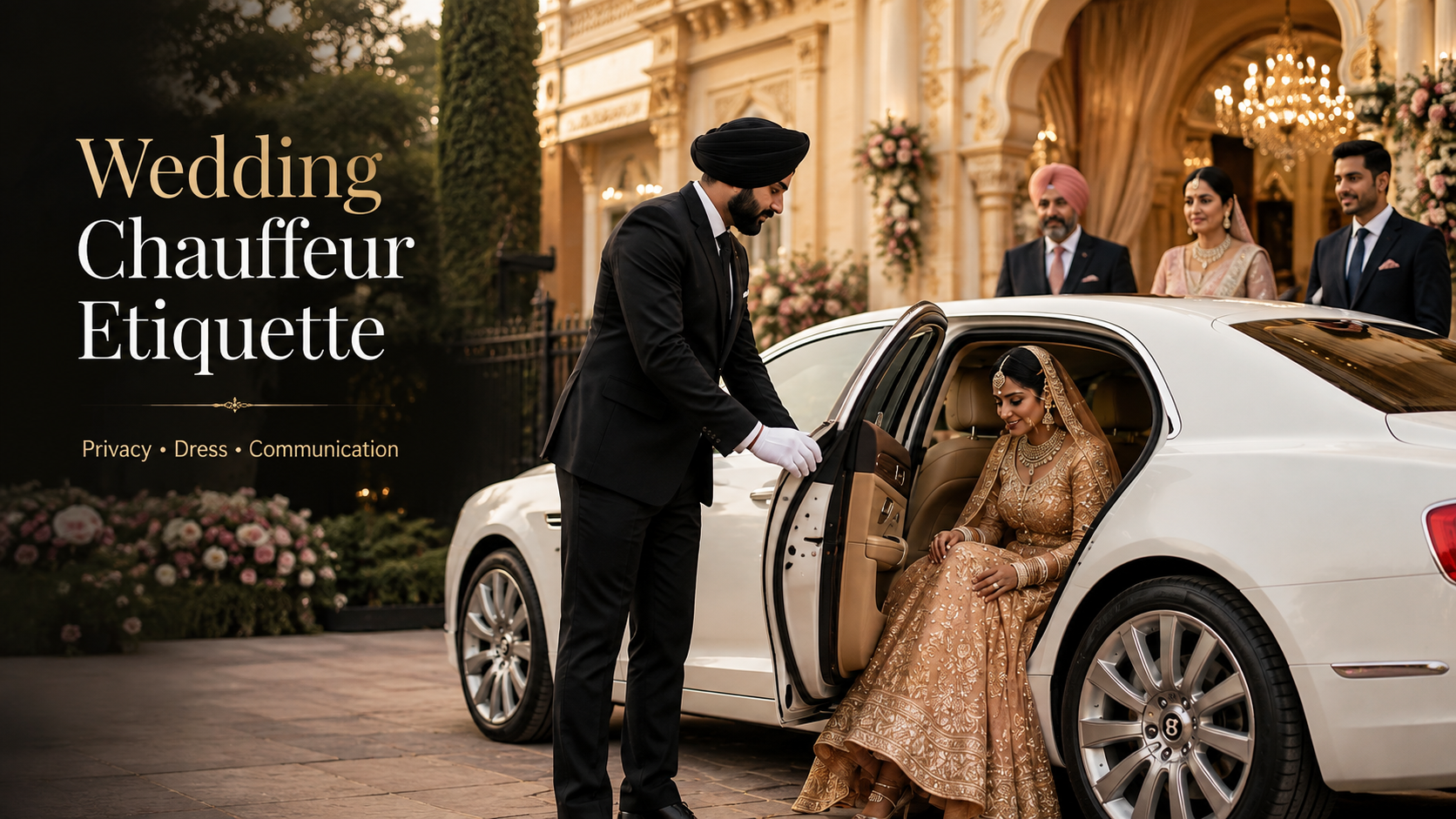
Door Opening Should Feel Natural
Opening the door for the bride, groom, parents or VIP guests is a normal part of premium chauffeur service. It should feel polished without becoming theatrical.
The chauffeur may need to open the door and then give the bride room to arrange her clothing. An elderly passenger may need additional space and time. A photographer may want the chauffeur outside the frame once the door is open.
The best service adapts to the situation rather than repeating one exaggerated routine at every stop.
The Bride Needs Space When Entering and Leaving
Bridal clothing can make getting into a car slower than normal. A lehenga may need to be arranged carefully, and a sister, mother or bridesmaid may need to help before the bride is completely seated.
The chauffeur should provide the necessary space and should not rush the process. They should also avoid handling the bride's clothing unnecessarily unless assistance is clearly requested and appropriate.
Professional service is helpful while still respecting personal space.
Groom Turbans Need Additional Awareness
A groom wearing a large turban may need more headroom and a slower entry movement, particularly in a lower luxury saloon. In a taller SUV such as the G Wagon, the issue may instead be the step into the vehicle.
The chauffeur should pay attention to the individual passenger rather than simply opening the door and expecting a normal entry.
This is a small detail, but wedding chauffeur etiquette is largely built from small details handled correctly.
Elderly Passengers Should Never Be Rushed
Parents and grandparents may travel in a separate luxury vehicle, and their journey deserves the same attention as the bride's and groom's transportation.
The chauffeur should position the car as conveniently as practical, allow the passenger to enter at their own pace and make sure walking aids or personal belongings remain accessible. The driver should wait until elderly passengers are properly settled before beginning the journey.
The existing PWC guide on cars for parents and grandparents also emphasises comfortable access and independent transport for older family members.
Luxury for an elderly passenger is often measured more by patience and convenience than by the badge on the bonnet.
Children Need Calm, Responsible Transport
Children can become excited during weddings, particularly when they are travelling with cousins or in a visually impressive wedding car.
The chauffeur should still provide a normal, controlled road journey. Children should not be encouraged to stand through openings, lean from windows or treat the moving car as part of the wedding entertainment.
The responsible adult travelling with the child manages the child, while the chauffeur manages the vehicle. Those roles should remain clear even on very short journeys.
The Chauffeur Should Not Join Baraat Driving Behaviour
A luxury groom car may sit in the centre of a highly energetic baraat convoy. Friends may be sounding horns, recording videos and asking the driver to repeatedly change position.
The professional chauffeur should maintain responsible control of the vehicle.
A G Wagon already creates a strong groom entry without aggressive driving. A Range Rover does not need to race another wedding car for a video. The groom's vehicle should provide a smooth, confident arrival rather than become part of unsafe convoy behaviour.
This is particularly important when the wedding journey uses public roads shared with normal traffic.
Wedding Cars Should Never Race Each Other
Several premium vehicles travelling together can create excitement, but there should be no competition between chauffeurs.
Each driver should know the destination and use a sensible route. A Range Rover does not need to overtake the groom's G Wagon, and the bridal support vehicle does not need to remain dangerously close to the main bridal car.
If the photographer needs to reach the venue first, they should leave earlier rather than asking the chauffeur to chase them.
A luxury convoy should look controlled because it is controlled.
Phone Communication Should Not Distract From Driving
Wedding-day transport often relies on WhatsApp, map pins and phone calls, but communication should never become a driving distraction.
The chauffeur should use navigation responsibly and should not be typing long messages while the car is moving. Non-essential communication can be handled by the family coordinator or by a passenger where appropriate.
If a major route change genuinely needs discussion, it should be dealt with safely rather than while the chauffeur is actively manoeuvring through traffic.
Professional communication should support the journey, not compete with it.
Music Should Follow the Passenger
Different passengers want different cabin environments.
The groom may enjoy music on the way to the baraat. An NRI guest arriving after a long international flight may want quiet. Grandparents may prefer conversation. A bride after doli may want almost complete silence.
The chauffeur should allow the passenger to set the mood where practical.
Luxury service is not about the driver demonstrating their own musical taste. It is about creating a comfortable cabin for whoever is sitting in the back.
Strong Fragrances Can Reduce Comfort
A wedding car should smell clean, but that does not require a powerful air freshener.
Strong fragrances can become uncomfortable on longer journeys, especially for children, elderly passengers or somebody already tired from a long wedding day. Floral decoration may also introduce its own natural scent.
A clean, neutral cabin generally feels more premium than a car filled with an overpowering artificial fragrance.
Smoking Should Never Affect the Passenger Cabin
A premium vehicle that smells of cigarette smoke immediately loses part of its luxury experience.
The chauffeur should ensure smoking does not affect the passenger cabin or create an unpleasant environment when the bride, groom or guests enter.
Vehicle presentation includes much more than polished paint. The passenger experiences temperature, smell, seating condition, noise level and driving quality together.
Cabin Temperature Should Be Adjusted for the Passenger
Punjab weddings take place in very different weather conditions. Summer heat can be intense, winters can be cold and wedding clothing itself can affect how comfortable somebody feels inside the car.
Where practical, the cabin should already be comfortable before the passenger enters. The chauffeur can then ask politely whether the temperature is suitable and make an adjustment if required.
A bride in heavy clothing may want stronger cooling than an elderly passenger in the same weather. The driver's personal preference should not automatically determine the cabin temperature.
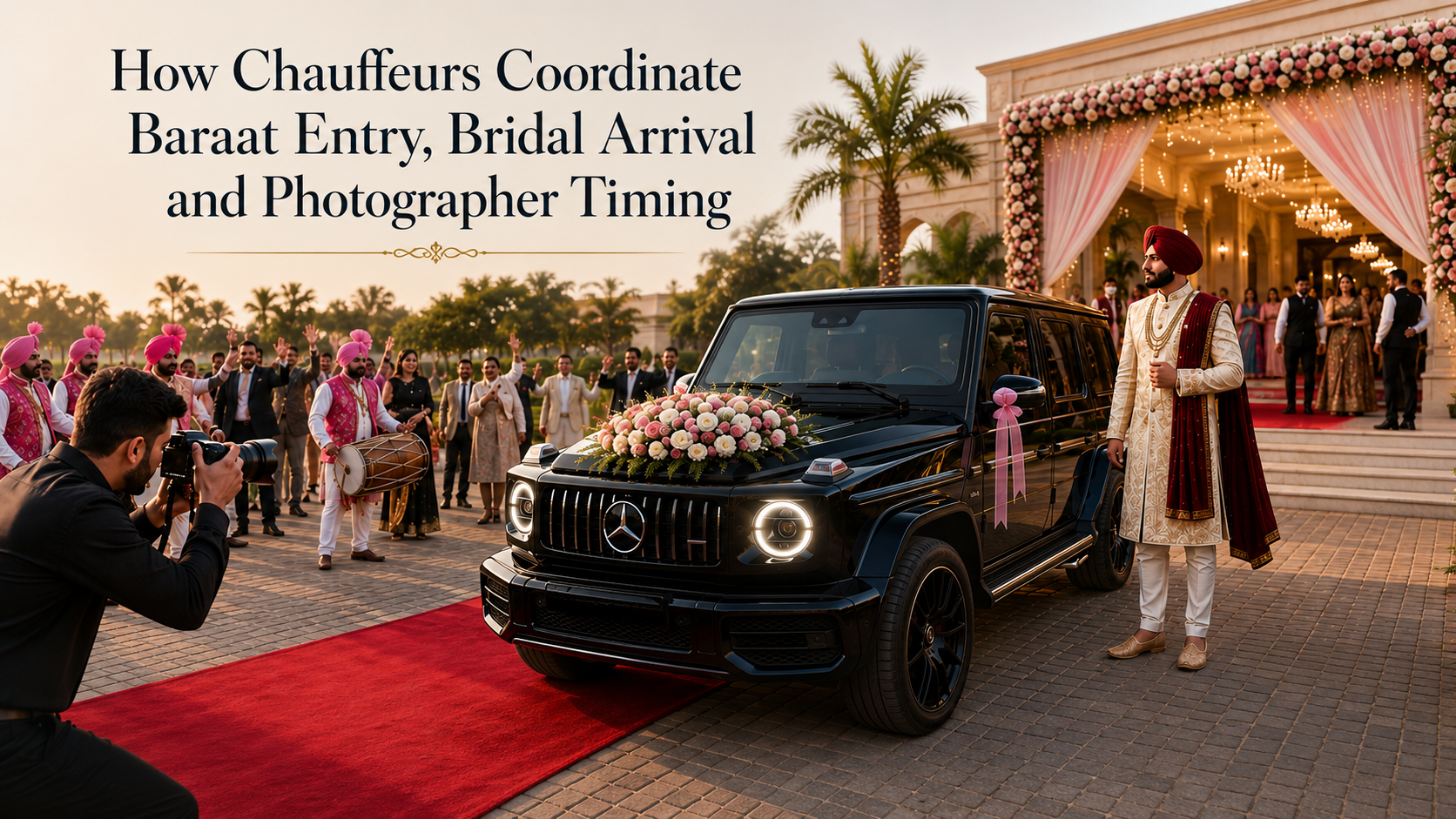
Chauffeur and Photographer Should Cooperate Professionally
Photographers often need a wedding car positioned in a particular place, and reasonable cooperation can dramatically improve the arrival photographs.
The photographer can explain the required angle and the chauffeur can position the car where it is practical and safe. However, the driver should not be expected to block a public road, enter unsuitable ground or perform unsafe manoeuvres simply to create a photograph.
Both professionals are contributing to the same wedding experience and should make each other's work easier.
Reception Arrivals Need Advance Coordination
The couple's arrival at the reception may be one of the strongest visual moments involving the wedding car.
If the couple is arriving in a Rolls-Royce Ghost, Maybach, G Wagon or Range Rover, the entrance should ideally be prepared before they arrive.
The chauffeur should know which gate to use and where the car is expected to stop. The photographer should have enough space, and guest cars should not be blocking the principal arrival point.
This is not something the couple should have to solve after reaching the venue. The chauffeur, planner and family coordinator should have already coordinated it.
Tips Should Never Be Requested
Gratuity is the family's choice.
A professional chauffeur should never repeatedly hint for a tip or make the passenger uncomfortable about money at the end of the assignment.
Good service should remain consistent regardless of whether a passenger has discussed gratuity.
If the family decides to recognise excellent chauffeur service, that decision should remain voluntary.
Booking and Payment Discussions Should Stay Away From the Couple
A bride should not be negotiating waiting charges during doli, and the groom should not be discussing a booking dispute while entering the reception.
Any legitimate issue involving payment, waiting, additional journeys or changed responsibilities should be handled between the transport provider and the designated booking or family coordinator.
Separating commercial matters from the passenger experience is part of premium service.
NRI Guests May Need Different Communication
An NRI guest may speak Punjabi fluently while still being unfamiliar with present-day roads in Punjab. Another guest may be more comfortable communicating in English. Somebody arriving from the UK, Canada, Australia or the United States may not know the exact hotel or neighbourhood where the family is staying.
The chauffeur should communicate simply and respectfully without making assumptions.
If the destination is difficult to locate, the exact map pin and local family coordinator are more useful than asking the international guest to guide the car based on old memories.
Punjab Wedding Cars' NRI wedding-car booking guide recommends keeping one dependable Punjab contact involved in overseas bookings, and that same person can be extremely useful for the chauffeur when local directions are needed.
Airport Chauffeur Service Has a Different Tone
The chauffeur collecting guests from Amritsar, Chandigarh or Delhi Airport is performing a different job from the chauffeur handling a groom entry.
Airport passengers may be tired after a long flight. They may have children, grandparents and substantial luggage. They may not want conversation at all.
The chauffeur's priority is to make identification easy, assist sensibly with the journey and take the passengers to the confirmed hotel or family destination comfortably.
A groom chauffeur may be dealing with photographers, Sehra Bandi timing and a baraat convoy. Both are premium services, but professionalism means understanding that the passenger requirements are different.
Late Flights Still Require Calm Service
An international flight may arrive several hours late, and the passengers may already be tired and frustrated.
The transport provider and family coordinator should handle the operational consequences of that delay. When the guests finally enter the vehicle, the chauffeur should still provide a calm and professional journey.
There is little value in repeatedly telling passengers how long the car has been waiting. Any legitimate waiting-time issue can be resolved through the booking contact rather than turning the airport transfer into an uncomfortable conversation.
Doli Requires Exceptional Discretion
The final bridal departure may be the most emotional transport movement of the entire wedding.
Parents may be crying, relatives may gather around the car and the bride may be emotionally exhausted after a long day.
This is where the chauffeur should become especially discreet. Conversation should be limited unless the passengers initiate it, the family should be given enough time to complete the farewell and the chauffeur should avoid unnecessary involvement in private moments.
Photography should never be assumed, impatience should not be shown and family emotions should remain private. Once the authorised coordinator confirms that the bridal party is ready, the chauffeur can begin the journey smoothly.
A professional doli chauffeur is present enough to help but discreet enough not to become part of the family's private farewell.
Late-Night Doli Should Never Become a Rushed Journey
If doli starts two or three hours later than planned, those lost hours should not be recovered through aggressive road driving.
The bride and groom may already have been awake since early morning. The chauffeur has also been part of a long assignment. The final journey should therefore remain controlled and comfortable.
The Bridal Doli Transport Checklist stresses the importance of providing the final destination in advance and considering late-night intercity travel as part of the bridal transport plan.
A delayed doli changes the arrival time. It should not change the standard of driving.
Families Also Shape the Quality of Chauffeur Service
Professional wedding transport works best when the family gives the chauffeur a clear environment in which to operate. Supplying an accurate pickup pin, realistic reporting time and confirmed destination means the driver begins with the information needed to perform the assignment correctly.
The family can improve the experience further by appointing one coordinator who communicates genuine changes rather than allowing several relatives to redirect the car independently. The chauffeur should not be pressured to drive aggressively, follow an unsafe convoy or perform unnecessary errands with a vehicle reserved for the bride or groom.
When the final destination is a farmhouse, village or difficult property, providing a local receiving contact can prevent confusion later in the day. These simple actions allow the chauffeur to concentrate on presentation, passenger comfort and driving instead of trying to solve family logistics from behind the wheel.
The Best Chauffeur Often Goes Almost Unnoticed
Excellent wedding chauffeur etiquette rarely produces dramatic stories because everything simply works as expected. The car reaches the pickup point correctly presented, the chauffeur knows the destination and the family does not need to repeat basic instructions. When the passenger approaches, the door is opened naturally and enough space is provided for bridal clothing, a groom's turban or an elderly passenger who needs additional time.
During the journey, the driving remains calm and the cabin feels private. Family conversations stay inside the vehicle, personal questions are avoided and the chauffeur understands when silence is more appropriate than conversation. If the ceremony runs late, communication goes through the designated coordinator instead of disturbing the couple.
At the reception, the vehicle is positioned sensibly for the photographer and the passenger can exit without the chauffeur becoming part of the centre of attention. Later, when doli begins, the same professional manner continues even if the schedule has moved several hours beyond the original plan.
That consistency is what separates a chauffeur-driven wedding car from simply hiring an expensive vehicle with somebody behind the wheel.
Punjab Wedding Cars offers chauffeur-driven options across its luxury wedding-car fleet, covering groom arrivals, bridal doli, NRI guest movement, airport transfers, reception travel and intercity wedding journeys throughout Punjab.
The car creates the visual impact, but the chauffeur influences everything the passenger experiences once the door closes. Professional dress establishes the first impression, preparation keeps the journey organised, discretion protects private family moments, thoughtful communication prevents unnecessary stress and coordination with one trusted family representative keeps last-minute changes under control.
When all of those elements work together, chauffeur service does not feel like another wedding arrangement that the family needs to manage. It feels calm, polished and dependable, which is exactly what luxury wedding transportation should provide.